


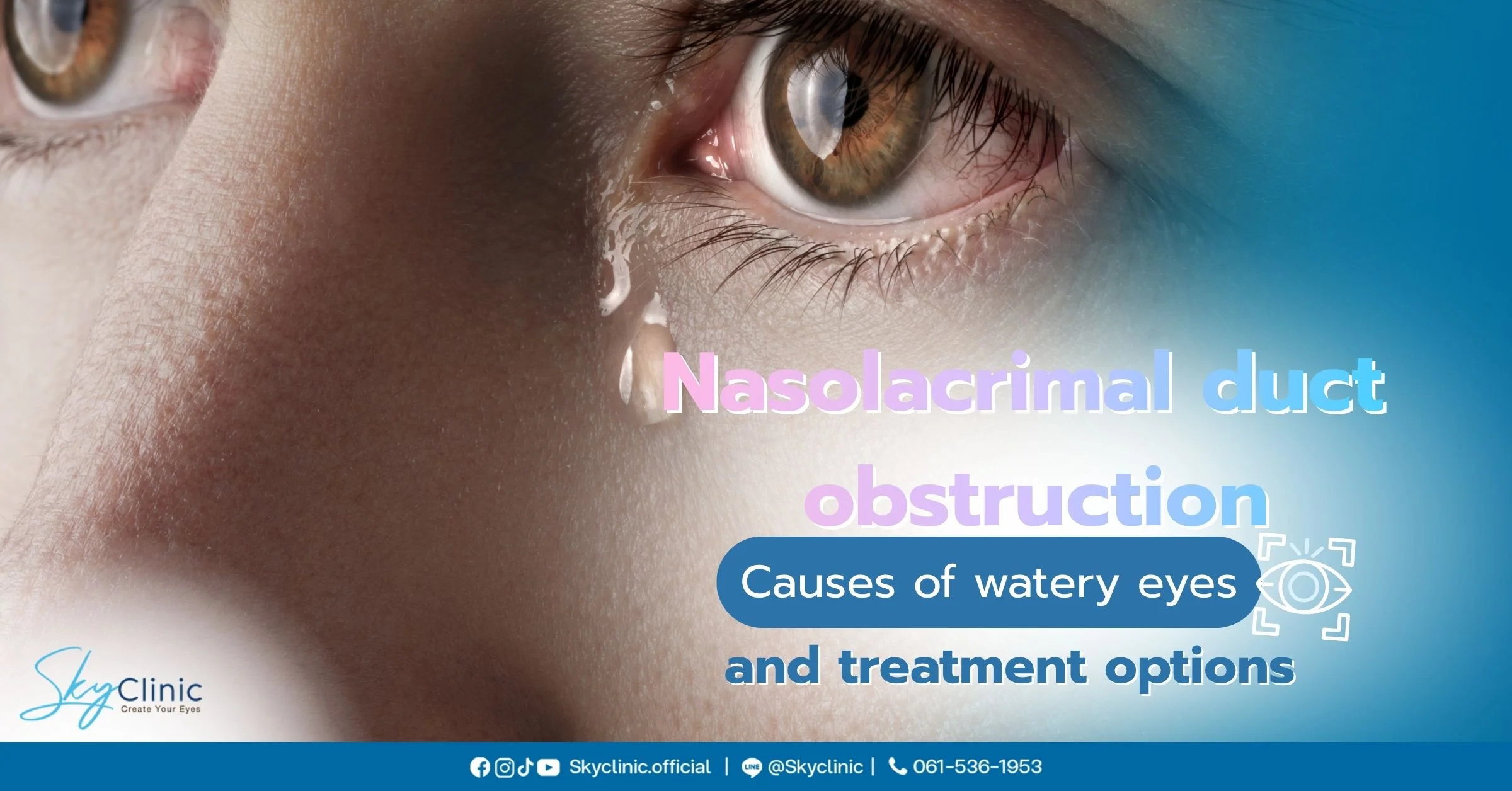
Constant Watery Eyes: Causes, Symptoms and Treatment Options




If you experience persistent tearing even when you are not crying, or feel as though tears are overflowing from your eyes and interfering with your vision, this may be a warning sign of a blocked tear duct. This is a common condition that can cause considerable discomfort in daily life. In this article, we will explore the causes, explain the symptoms you can look out for, and discuss treatment options that may help relieve symptoms and improve your quality of life.
What Is a Blocked Tear Duct?
A blocked tear duct is a disorder of the tear drainage system. Normally, tears are produced to lubricate the eyes and drain through tiny openings at the inner corners of the eyelids into the nasal cavity. However, when any part of this drainage pathway becomes blocked, tears cannot drain properly. As a result, tears accumulate and overflow onto the face, making the eyes appear as though the person is constantly crying. If left untreated for a prolonged period, this condition may lead to infection.
Symptoms of a Blocked Tear Duct
Symptoms of this condition often develop gradually and may worsen without proper treatment. The following signs can help you recognize possible abnormalities in your eyes.
Persistent Excessive Tearing
The most noticeable symptom is excessive tearing or persistently watery eyes, even when you are in a normal emotional state, are not feeling sad, or are not exposed to wind. Constant tear accumulation can be bothersome and may require you to wipe your eyes frequently. Repeatedly wiping the eyes can also cause irritation to the delicate skin around them.
Abnormally Excessive Eye Discharge
When the tear drainage system does not function properly, mucus and other debris can accumulate around the eyes. You may notice a large amount of crusty discharge upon waking or thick, sticky discharge collecting around the inner corners of the eyes and along the eyelashes throughout the day. These symptoms may indicate a problem with the eyes' natural tear drainage system.
Pus Discharge from the Inner Corner of the Eye
If the blockage leads to an infection, cloudy white or yellow pus may seep from the tear duct opening at the inner corner of the eye. Gentle pressure over the tear sac may cause pus to flow backward through the opening. This symptom may indicate a worsening infection and requires prompt consultation with an ophthalmologist.
Pain, Swelling, and Redness Around the Inner Corner of the Eye and Tear Sac
Chronic blockage can lead to inflammation of the tear sac (dacryocystitis), causing swelling, redness, warmth, and significant pain in the area beside the nose near the inner corner of the eye.
Blurred Vision
When tears continuously overflow and accumulate on the corneal surface, they can temporarily interfere with clear vision, causing objects to appear unclear or blurred, as though looking through a watery veil. You may need to blink frequently to clear away excess tears and temporarily improve your vision. This can interfere with daily activities, work, and driving.
Recurrent Eye Infections
When tears cannot drain properly, bacteria can become trapped and multiply in the tear sac. This can lead to recurrent episodes of red eyes, conjunctivitis, or other eye infections. Even if eye drops help relieve the symptoms, infections may continue to recur if the underlying cause, a blocked tear duct, has not been treated.
Causes of a Blocked Tear Duct

A blocked tear duct can develop due to several factors, including congenital structural abnormalities and age-related changes. The main causes are as follows.
Congenital Tear Duct Obstruction in Newborns
In many newborns, the valve at the end of the tear duct that opens into the nose has not yet fully opened, or a thin membrane remains over the opening. This prevents tears from draining into the nose, causing watery eyes and excessive eye discharge. In most cases, the condition improves and resolves on its own as the baby grows. Gentle massage of the inner corner of the eye, as recommended by a doctor, may also help.
Age-Related Changes That Narrow the Tear Drainage Openings
As we age, the tissues and muscles around the eyes undergo natural changes. The tear drainage openings may also become narrower with age, reducing the efficiency of tear drainage and eventually leading to a blockage.
Chronic Infections, Injuries, or Facial Surgery
Repeated infections of the eyes or nasal cavity can cause scar tissue to form in the tear ducts. In addition, previous facial injuries or sinus and nasal surgeries may affect the structure of the tear ducts, causing compression or damage that obstructs tear drainage.
Side Effects of Certain Eye Drops
Long-term, continuous use of certain eye drops over several years may cause irritation and chronic inflammation around the tear duct openings, potentially contributing to narrowing or blockage of the tear ducts. Therefore, eye drops should be used strictly under the guidance of an ophthalmologist.
Tumor-Related Complications
Although rare, tumors in the tear sac, tear ducts, or nasal cavity can also obstruct tear drainage by compressing the drainage pathway. If you experience nasal congestion along with persistent tearing from only one eye, or have nosebleeds, you should seek a thorough medical evaluation promptly.
How Ophthalmologists Diagnose a Blocked Tear Duct
To determine whether the symptoms are caused by a problem with tear production or an abnormality in the tear drainage system, an ophthalmologist will perform a detailed diagnostic examination as follows:
Fluorescein Dye Disappearance Test: The ophthalmologist will instill a special dye into the eyes and observe them for approximately 5–10 minutes. If the dye remains in the eyes instead of draining away, this indicates a problem with the tear drainage system and suggests a possible blockage.
Tear Duct Irrigation and Probing: A small, blunt-tipped probe may be inserted through the tear duct openings at the inner corners of the upper and lower eyelids. Saline is then flushed through the ducts. If the patient feels the fluid flowing down the throat, the ducts are likely open. If the fluid flows back out, this may indicate a blockage.
Dacryocystography: When more detailed information about the structure of the tear drainage system is needed, the doctor may inject a contrast agent into the tear ducts and perform an X-ray or CT scan. The resulting images help identify the location of the blockage and detect other abnormalities.
Treatment Options for a Blocked Tear Duct
Treatment for a blocked tear duct depends on the patient's age, the underlying cause, and the severity of the symptoms. The doctor will recommend the most appropriate approach to help restore normal tear drainage and allow the patient to resume daily activities more comfortably.
Inner Corner Eye Massage and Medication
For infants and patients with early-stage symptoms, massage at the inner corner of the eye may be recommended as an initial treatment method. Using the index finger, gentle pressure is applied at the inner corner of the eye and moved downward along the side of the nose to help push tears through the obstructing membrane. Antibiotic eye drops may also be prescribed if an infection is present. This method is highly effective in infants with congenital tear duct obstruction and may help relieve symptoms in some adults, depending on the underlying cause.
Tear Duct Probing
If massage is unsuccessful, the doctor may consider tear duct probing. This procedure involves inserting a small metal probe to open the narrowed or blocked drainage pathway. It is commonly performed in children around one year of age or older whose condition has not resolved on its own. In adults, probing may also be considered in selected cases to assess or open a narrowed tear drainage pathway.
Silicone Tube Intubation to Widen the Tear Drainage Pathway
In cases of recurrent blockage or when tear duct probing does not provide a lasting solution, the doctor may insert a small silicone tube into the tear drainage system and leave it in place for a period of time (approximately 3–6 months). The tube acts as a support to help keep the tear drainage pathway open and reduce the risk of narrowing again after the tube is removed.
Surgery to Create a New Tear Drainage Pathway (DCR)
For adults with a completely blocked tear duct, dacryocystorhinostomy (DCR) is a highly effective treatment option. The procedure creates a new tear drainage pathway that directly connects the tear sac to the nasal cavity. It can also be performed endoscopically through the nose, leaving no external scar and providing long-term relief from excessive tearing.
How to Clean Your Eyes
Keeping the area around the eyes clean is important for people experiencing excessive tearing, as it helps reduce the risk of recurrent infections.
Warm Compress: Soak a clean cloth in warm water, wring it out until damp, and place it over the eyes for approximately 5–10 minutes. The warmth helps soften oils that may be blocking gland openings and makes hardened eye discharge easier to remove.
Cleaning the Eyes: Use a cotton pad moistened with cooled boiled water or sterile saline solution to gently clean the eyelids, wiping from the inner corner toward the outer corner of the eye. Avoid rubbing forcefully or wiping back and forth. Use a fresh cotton pad each time you repeat the process to prevent germs from being transferred back into the eyes.
Frequently Asked Questions About Blocked Tear Ducts
We have compiled answers to frequently asked questions about this condition to help ease concerns and provide a clearer understanding.
Can a Blocked Tear Duct Resolve on Its Own?
In newborns, up to 90% of cases may resolve on their own by the age of one year with proper tear duct massage. However, in adults, a blocked tear duct usually does not resolve on its own, and symptoms may gradually worsen. Treatment by an ophthalmologist is therefore necessary to address the underlying cause.
Should You See a Doctor If Your Eyes Water Constantly but Do Not Hurt?
Yes, you should see a doctor even if there is no pain. Persistent tear accumulation can create an environment where germs thrive, increasing the risk of acute dacryocystitis in the future. In addition, excessive tearing can interfere with vision and potentially cause hazards during daily activities or while driving.
Will Surgery for a Blocked Tear Duct Leave a Facial Scar?
With advances in surgical technology, dacryocystorhinostomy (Endoscopic DCR) can be performed using an endoscope inserted through the nostril, leaving no external facial scars. This means you can undergo treatment without worrying about visible facial scarring afterward.
Summary

Although a blocked tear duct may seem like a minor inconvenience, leaving it untreated can lead to serious infections. Recognizing the symptoms and seeking medical attention promptly can help ensure timely treatment. For other concerns related to eye appearance, you can consult the ophthalmology specialists at Sky Clinic, who are experienced in Double Eyelid Surgery, Medial Epicanthoplasty, Ptosis Correction, Subbrow Lift, Natural Treatment Options for Deep Under-Eye Hollows, and Under-Eye Bag Removal Surgery, to receive treatment tailored to your needs.
Source : -