


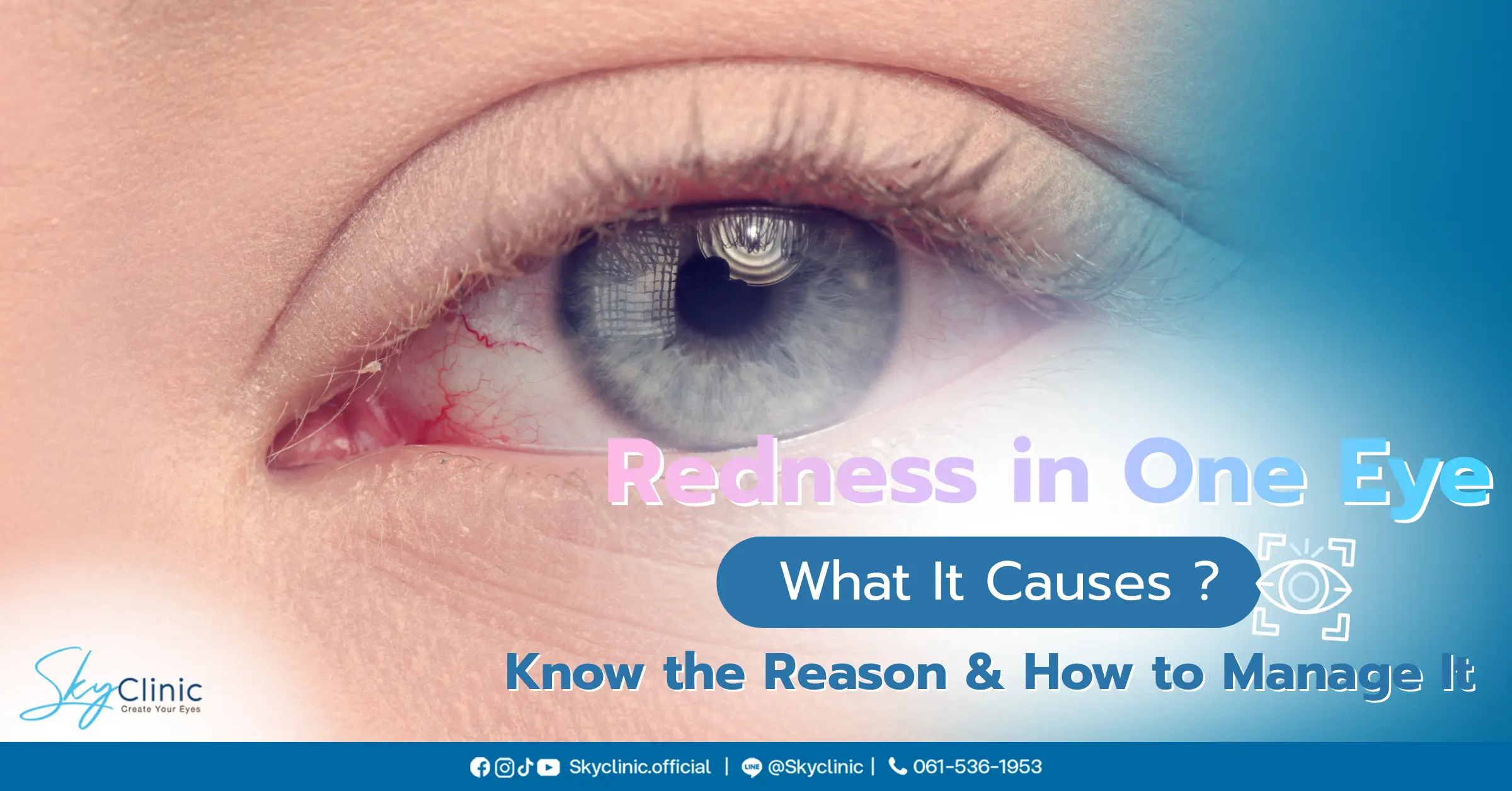
What Causes Redness in One Eye, and Is It Dangerous?




Many people may look in the mirror and suddenly notice redness in one eye, leading them to wonder what is causing it and whether it could pose a risk to their vision. This article explores the possible causes of redness in one eye and explains how to manage it properly, helping you make informed decisions about your eye care.
What Causes Redness in One Eye?
Redness in one eye can result from several factors, including lifestyle habits, environmental conditions, and conjunctival infections. Understanding the main causes can help you initially assess the symptoms and determine an appropriate way to manage them. Let’s explore some common causes of this condition.
Conjunctivitis Caused by a Viral or Bacterial Infection
One of the most common causes of eye redness is a viral or bacterial infection of the conjunctiva. Symptoms may include yellow or green eye discharge, along with significant itching or irritation. Touching the eyes with unclean hands is a common way for germs to enter the eyes. If an infection is suspected, maintain good hygiene and avoid sharing personal items with others to reduce the risk of spreading the infection to the other eye.
Red Eye Caused by Allergies and Irritation
Environmental factors such as dust, smoke, and pollen can trigger eye allergies. Symptoms often include intense itching and watery eyes. In addition, contact with chemicals, such as shampoo or soap that splashes into the eyes, can cause irritation and conjunctival redness. Avoiding allergens and rinsing the eyes with clean water are initial steps that may help relieve irritation.
Dry Eyes or Eye Strain from Prolonged Screen Use
Looking at a computer or smartphone screen for extended periods can reduce the frequency of blinking and lead to dry eyes. When the eye surface lacks sufficient moisture, the blood vessels in the conjunctiva may become more prominent, causing redness. If this behavior continues, irritation may persist. Taking regular breaks from screen use and using artificial tears to keep the eyes moist can help relieve dryness and reduce eye redness.
Subconjunctival Hemorrhage Appearing as a Red Patch
Sometimes, a clearly defined red patch may appear on the white of the eye. This is often caused by a small blood vessel breaking beneath the conjunctiva. It may occur after rubbing the eye forcefully, coughing or sneezing intensely, or lifting heavy objects. Although it may look alarming, a subconjunctival hemorrhage is usually painless and does not affect vision. The red patch typically fades on its own within a few weeks.
Problems Caused by Contact Lenses
Wearing contact lenses for too long or failing to clean them properly can cause irritation and inflammation of the cornea. Wearing contact lenses overnight further increases the risk of complications. If you notice redness accompanied by pain or discomfort while wearing contact lenses, remove them immediately and rinse your eyes with clean water if needed. Eye redness accompanied by pain in contact lens wearers should be assessed promptly by an eye care professional.
Is Redness in One Eye Dangerous?
When eye redness occurs, many people worry about whether it could affect their vision in the long term. The severity varies depending on the underlying cause. Observing other accompanying symptoms can help you determine how to care for your eyes and when to seek medical assessment.
Less Serious Causes
Less serious cases are often caused by a subconjunctival hemorrhage, allergies, or mild irritation. These conditions usually do not cause severe pain or affect visual clarity, and they are not typically accompanied by large amounts of green or yellow discharge. Maintaining good hygiene, resting your eyes, or using artificial tears may help relieve symptoms, allowing the redness to gradually fade on its own.
Potentially Serious Causes
Severe eye pain, blurred vision, light sensitivity, or a large amount of eye discharge are warning signs that may indicate a serious infection or a corneal problem. These symptoms may indicate a serious condition, so you should not use eye drops without medical advice. Seeking prompt medical assessment can help ensure appropriate treatment and reduce the risk of complications.
Initial Steps to Manage Redness in One Eye

When an eye problem occurs, taking the right steps early can help relieve symptoms and reduce the risk of spreading an infection to the other eye. You can start caring for your eyes by making a few simple changes to your daily habits. Let’s explore some ways to help relieve the symptoms.
Avoid Rubbing or Touching Your Eyes
Rubbing your eyes is a habit you should avoid when you experience eye problems, as your hands may carry germs. Touching your eyes can increase irritation and make it easier for an infection to spread. If your eyes feel itchy or irritated, gently dab the area with a clean tissue instead of rubbing your eyes with your hands. This can help prevent injury to the tissues around the eyes and further irritation.
Clean the Eye Area and Wash Your Hands Regularly
Good hygiene is essential for proper eye care. Wash your hands regularly with soap and clean water, especially before and after touching your face. If discharge collects around the base of your eyelashes, gently clean the area with a cotton pad moistened with clean water or sterile saline solution. Maintaining good hygiene helps reduce the buildup of bacteria and lower the risk of spreading germs to the other eye.
Stop Wearing Contact Lenses and Using Eye Makeup Temporarily
While your eye is red, avoid wearing contact lenses until the redness has resolved. Contact lenses may cause further irritation and increase the risk of infection. You should also avoid eye makeup and cosmetics around the eyes to reduce the risk of makeup particles or chemicals entering the eyes and delaying recovery.
Use a Cold Compress or Artificial Tears to Relieve Irritation
If eye redness is caused by allergies or irritation, placing a clean, cool cloth over the eyelid can help reduce swelling and relieve itching. Artificial tears can also help moisturize the eyes and flush out dust particles or allergens, making the eyes feel more comfortable and reducing redness.
Do Not Use Eye Drops Without Knowing the Cause
There are many types of eye drops, each containing different active ingredients. Using eye drops without knowing the underlying cause may lead to side effects. This is particularly important for steroid-containing eye drops, which can cause eye complications or worsen certain infections if used incorrectly. If symptoms do not improve with basic home care, consult an ophthalmologist for an appropriate assessment and treatment.
Frequently Asked Questions About Redness in One Eye
Eye redness can cause concern and raise many questions, particularly about whether it is contagious and how to care for the eyes. We have compiled some common questions about eye redness to help you better understand the condition and manage it appropriately.
Do You Need to See a Doctor if One Eye Is Red but Not Painful?
If your eye is red but not painful, there is no discharge, and your vision remains clear, the cause may be a broken blood vessel or mild irritation. These conditions may improve on their own. However, if the redness does not fade within two weeks or other unusual symptoms develop, you should see an ophthalmologist for an assessment.
Can Redness in One Eye Spread to Both Eyes?
Yes. If the cause is a viral or bacterial infection, germs may spread to the other eye through rubbing your eyes or sharing towels and other personal items. Washing your hands thoroughly and avoiding touching your eyes are important ways to reduce the risk of spreading the infection.
Can an Eye Infection That Causes in One Eye Spread to the Other Eye?
Viruses and bacteria that cause eye redness can spread easily. If you touch the infected eye and then accidentally rub the other eye, the germs may spread and cause inflammation in the other eye as well. Avoiding the sharing of personal items and maintaining good hygiene are therefore very important.
Summary

Redness in one eye can be managed more effectively when the underlying cause is identified. Avoiding eye rubbing, maintaining good hygiene, and resting your eyes are basic steps that can help reduce irritation. If you are looking for an Eye Surgery Clinic to address other eyelid concerns, you can consult an ophthalmologist at Sky Clinic. The clinic offers Double Eyelid Surgery, Medial Epicanthoplasty, Ptosis Correction, Subbrow Lift, Under-Eye Bag Removal Surgery, and Endoscopic Brow Lift Surgery, with treatment tailored to your individual concerns.
Source : -