


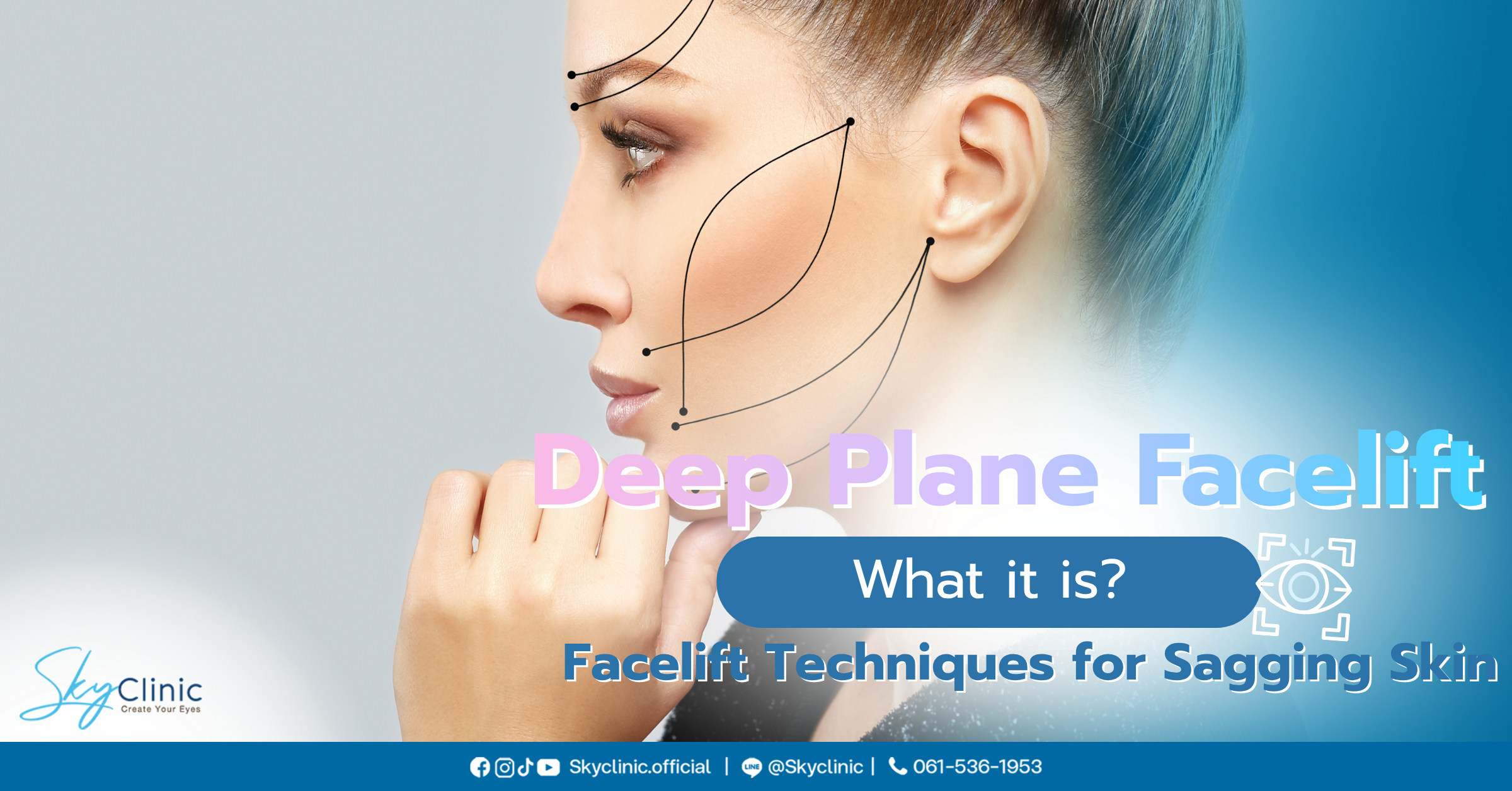
Deep Plane Facelift: A Deep Dive into This Youth-Restoring Facelift Technique




As we age, sagging skin and deep facial lines and folds inevitably become more noticeable. Many people look for ways to restore a more youthful appearance. Today, various techniques are gaining significant attention, and many may wonder what a Deep Plane Facelift is and why it is currently being discussed in the field of aesthetic surgery. This article will take an in-depth look at the details.
What is a Deep Plane Facelift?
A Deep Plane Facelift is a facelift surgery technique that works deep within the facial muscle and underlying fat layers. The surgeon lifts and tightens these structures together without separating the skin from the muscle layer as extensively as with traditional techniques. This helps lift the face for a natural-looking appearance without an unnatural or overly tight look, while directly addressing sagging, particularly around the nasolabial folds, cheeks, and facial contour.
What Problems Can a Deep Plane Facelift Address?
As time passes, the skin structure that was once firm and youthful gradually deteriorates. A Deep Plane Facelift can therefore play an important role in addressing these signs of aging. This technique is designed to target sagging in areas that are difficult to correct and can help address the following main facial concerns.
Age-Related Sagging and Drooping Cheeks
Sagging cheeks often occur as the fat and muscle tissues in the cheek area lose elasticity and descend due to gravity. A Deep Plane Facelift addresses these tissues by lifting and tightening the muscle and fat layers back toward their proper positions. This helps the cheeks appear fuller and more lifted, giving the face a more defined and dimensional appearance.
Deep Nasolabial Folds That Make the Face Look Tired
As time passes, the skin structure that was once firm and youthful gradually deteriorates. A Deep Plane Facelift can therefore play an important role in addressing these signs of aging. This technique is designed to target sagging in areas that are difficult to correct and can help address the following main facial concerns.
An Undefined Jawline and Double Chin
Sagging in the lower face and neck can cause the once-defined jawline to become less distinct and lead to loose, sagging tissue around the chin. This technique helps tighten sagging skin and reshape the face for a slimmer appearance, making the facial contour more defined.
Age-Related Changes in Facial Structure
As the bones and tissues deteriorate with age, the overall facial structure inevitably changes and loses balance. A Deep Plane Facelift helps reorganize the underlying structures rather than simply pulling the skin tight. It helps improve the balance of the facial structure, making the face look more defined and well-proportioned and helping restore confidence.
Who May Not Be Suitable for a Deep Plane Facelift?
Although this Deep Plane Facelift technique offers many benefits and can provide impressive results, it is not suitable for everyone considering this type of surgery. To ensure safety and reduce potential risks, certain individuals may need to avoid the procedure or consult a doctor closely, including:
People with severe or uncontrolled underlying medical conditions: heart disease, uncontrolled high blood pressure, or diabetes with fluctuating blood sugar levels, as these conditions may affect blood circulation and increase the risks during surgery.
Heavy smokers: Nicotine causes blood vessels to constrict, reducing blood flow to the surgical area. This increases the risk of tissue death, delayed wound healing, or noticeable scarring. Smoking must be completely avoided before and after surgery.
People with bleeding problems: Taking blood-thinning medications or having a condition that causes delayed blood clotting may increase the risk of excessive blood loss or hematoma after surgery. A thorough medical evaluation is required.
Benefits of a Deep Plane Facelift

Choosing facial lifting surgery using this technique has become increasingly popular due to the following notable benefits.
Natural-Looking Results Without an Overly Tight Appearance
A Deep Plane Facelift does not focus solely on pulling the outer layer of skin but instead lifts the deeper tissues and muscles together. This helps prevent the skin from being pulled too tightly or making the face appear flat and lacking dimension, resulting in a softer and more natural-looking appearance.
Deep Lifting to Address the Underlying Cause of Sagging
This technique works directly on the SMAS layer, helping lift and reposition sagging underlying structures to address facial sagging.
Helps Preserve Natural Facial Expressions and Smiles
Traditional facelift techniques may pull certain muscles, making facial expressions appear stiff. However, this technique does not place tension on the outer layer of the skin, allowing the muscles involved in facial expressions to move freely. Whether smiling, laughing, or expressing emotions, the face can continue to look natural and lively, as it did before.
Long-Lasting Results for Several Years
Because this technique adjusts and lifts the underlying facial structures, the results are more stable and long-lasting than those achieved by tightening only the skin. In general, the results can last for several years.
Deep Plane Facelift Surgery Procedure
To achieve natural-looking results, this technique requires the surgeon’s expertise and experience. The Deep Plane Facelift procedure includes the following steps:
Facial Assessment and Surgical Planning: The doctor evaluates the degree of sagging, bone structure, and muscle layers to design incision lines that are appropriate for each individual.
Local Anesthesia or General Anesthesia: The procedure is usually performed under general anesthesia combined with local anesthesia.
Incisions Around the Temples and Ears: The doctor makes incisions around the temples, in front of the ears, and behind the ears. The incision lines are designed to be hidden within the hairline or natural folds, making them less noticeable once healed.
Lifting the Deep Plane: This is the most important step. The doctor lifts the SMAS layer and deeper fat structures together, creating a more dimensional and natural-looking lifting effect.
Trimming Excess Skin and Carefully Closing the Incisions: Concealed incision techniques are used to minimize scarring and reduce tension on the outer skin.
Applying Dressings and Postoperative Care: Dressings are applied to help support the facial structure, reduce swelling, and minimize bruising during the initial recovery period.
Recovery Time After a Deep Plane Facelift
Many people may be concerned that Deep Plane Facelift surgery requires a long recovery period. The recovery timeline to be aware of includes the following:
During the First Week: Swelling and bruising may occur during the first 7–14 days. The doctor will schedule an appointment for suture removal approximately 10–14 days after surgery.
Wearing a Facial Compression Bandage: A facial compression bandage should be worn to support the facial structures during the first 3 days, 24 hours a day. After that, it should be worn for 12 hours per day.
Exercise: You can resume exercise and strenuous activities approximately 3–4 weeks after surgery.
Visible Results: The face will gradually settle, with full results becoming apparent within 3–6 months.
Longevity: This facelift technique can last an average of 7–12 years, depending on age, skin care, and lifestyle.
Consult Sky Clinic for Eyelid Surgery and Endoscopic Brow Lift Techniques
If you're concerned about drooping eyebrows or a sagging forehead that makes your eyes look less refreshed, a forehead lift or brow lift may be another option. At Sky Clinic, we offer the Endoscopic Brow Lift technique using the medical device Endotine, which helps open up the eyes for a more rounded and youthful appearance, conceal the incisions discreetly, and achieve a more youthful-looking result.
Frequently Asked Questions About Deep Plane Facelift
Deciding to undergo facelift surgery is a significant change and naturally comes with many questions and concerns. To help you gain a proper understanding and prepare with confidence, we have compiled answers to some of the most common questions about the Deep Plane Facelift technique.
Is a Deep Plane Facelift Painful?
You will not feel pain during the surgery because the procedure is performed under anesthesia. During the recovery period, you may experience some mild tightness or soreness, which can be relieved by taking pain medication as prescribed by the doctor. These symptoms will gradually improve and resolve on their own within a short period.
How Is a Deep Plane Facelift Different from a Traditional Facelift?
A traditional facelift generally focuses on lifting only the outer layer of the skin, which may make the face look tight and flat, with results that may not last as long. In contrast, this technique works deeper to lift the underlying muscle and fat structures, giving the face more dimension, a natural-looking appearance, and longer-lasting effects.
What Age Is Suitable for a Deep Plane Facelift?
There is no specific age limit, but it is generally recommended for people with noticeable facial sagging, most commonly those aged 40–50 and above. However, you should consult a doctor to assess your facial structure and determine whether the procedure is appropriate for you.
Summary

Facelift surgery is a procedure that addresses sagging at the deeper muscle structures, helping achieve long-lasting results. Understanding the procedure and following proper self-care instructions can help support better-looking results. If you are experiencing a sagging forehead, forehead wrinkles, or a wavy forehead, you can consult an ophthalmologist at Sky Clinic, which offers Double Eyelid Surgery, Medial Epicanthoplasty, Ptosis Correction, Subbrow Lift, Under-Eye Bag Removal Surgery, and Endoscopic Brow Lift Surgery to provide treatment suited to your concerns.
Source : -