


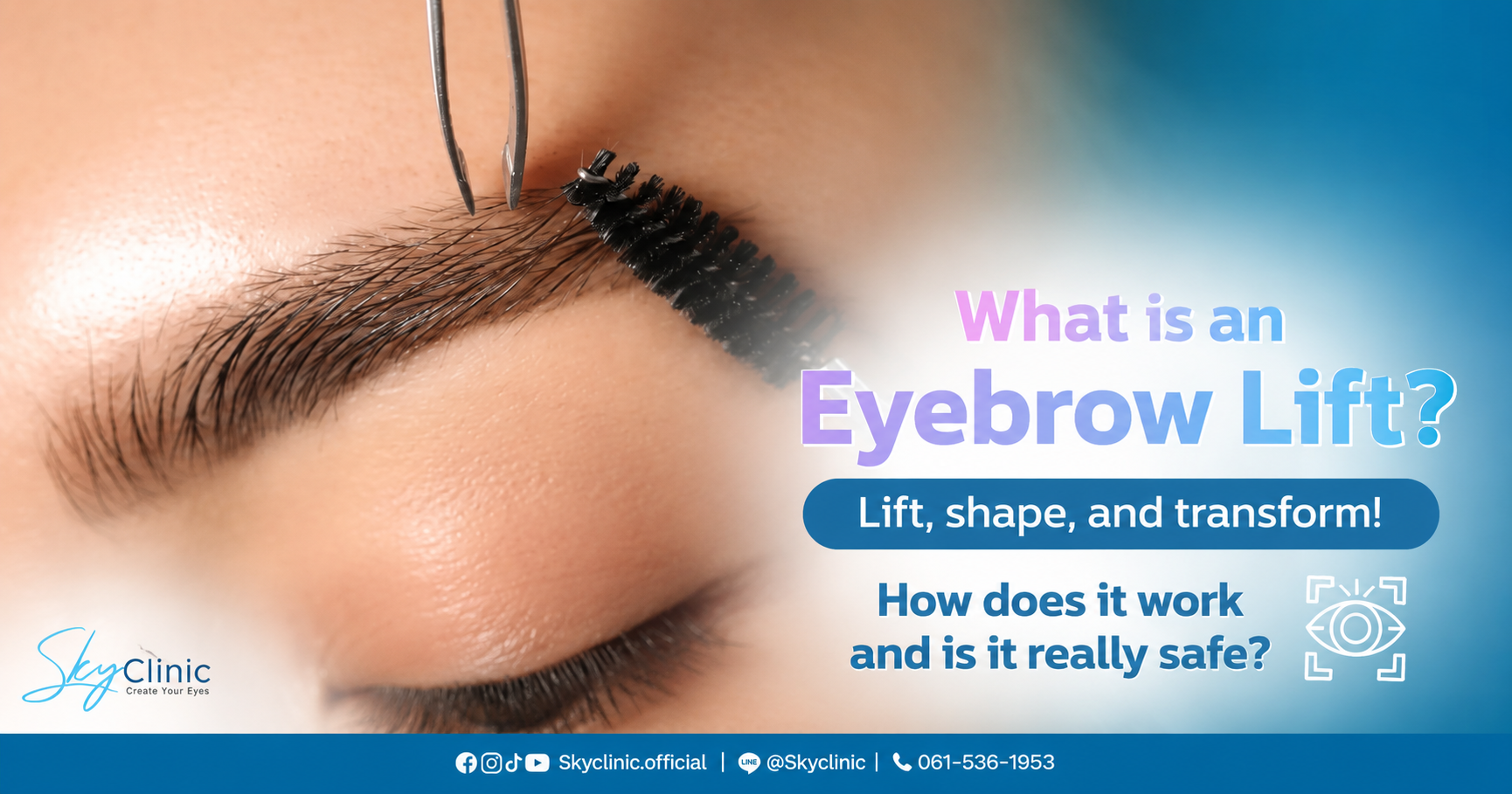
Drooping Eyebrow Tail: Causes, Treatments, and Brow Lift Guide




Many people may experience concerns such as looking tired, appearing older than their actual age, or feeling that things have not been going well in life. Did you know that the position of your eyebrows, especially the drooping eyebrow tail, can influence these perceptions more than you might expect? In traditional beliefs, eyebrow shape is also associated with facial physiognomy, where it is thought to affect a person’s overall impression. In this article, we will explore the causes behind this concern and introduce various effective treatment options to help restore a brighter, more refreshed appearance while boosting confidence.
What does a Drooping Eyebrow Tail Indicate in Physiognomy?
In facial analysis, the eyebrows are often considered the “crown” that defines the face's overall appearance. People with drooping eyebrow tails are commonly perceived as more anxious, with facial expressions that appear tired or subtly sad. According to traditional beliefs, drooping eyebrow tails may also be associated with challenges related to luck and finances. In addition, they may affect perceived credibility in business or communication, as others might sense a less positive or less energetic impression. For this reason, adjusting the eyebrow shape has become an option that many people are interested in, as it can help enhance confidence while creating a brighter and more positive overall appearance.
What Causes a Drooping Eyebrow Tail?
Sagging around the eye area can be caused by several factors and often develops gradually over time. The underlying causes may differ from person to person, so understanding the root of the problem is important for achieving a more accurate diagnosis and selecting the most appropriate treatment approach. The most common causes include the following:
Aging
Over time, the skin’s structure, including collagen and elastin, gradually deteriorates and is produced in lower amounts. As we age, the skin on the forehead and around the eyes loses elasticity, causing the brow area to sag gradually due to gravity. The muscles that once supported the brow also weaken over time, causing the eyebrows to descend closer to the upper eyelids. This can make the overall face appear older and less refreshed, and in some cases, it may also be accompanied by hidden eyelids.
Genetics
Facial bone structure and the muscles around the eyes are largely influenced by genetics. Some individuals may naturally have downward-sloping eye sockets or thicker eyelid skin due to inherited family traits. These genetic factors can contribute to a naturally drooping eyebrow shape, even at a younger age, without the need to wait for age-related collagen decline. It is considered a natural anatomical characteristic that is difficult to avoid.
Repeated Eye Rubbing
Daily habits can also have a significant impact. Frequently rubbing the eyes, whether due to allergies or habit, can stretch and irritate the tissues and muscles around the eyes. Over time, this repeated friction may contribute to sagging around the eyelids and brows. Such habits can gradually weaken the delicate tissues around the eyes and brows, often without immediate notice.
Ways to Fix a Drooping Eyebrow Tail: Which Treatment Option Is Best for You?

Advances in medical technology have provided a wide range of options for addressing sagging around the eye area, ranging from non-surgical treatments to medical procedures that deliver more defined and long-lasting results. Choosing the most suitable approach depends largely on the severity of the concern and each individual’s facial structure.
Botulinum Toxin Injection
Injection of muscle-relaxing agents around the eyes and forehead is a popular option for individuals with mild to moderate sagging. This treatment works by reducing the activity of the muscles that pull the brows downward, allowing the muscles responsible for lifting the brows to function more effectively. As a result, the eyebrows appear slightly lifted and more refreshed. It is a quick and convenient procedure with no downtime. However, the results are temporary and typically last around 4 to 6 months.
Thread Lifting
This procedure involves inserting dissolvable medical threads into the skin around the forehead and outer eye area to lift and tighten sagging tissue. In addition to supporting the skin structure, the barbs on the threads help stimulate collagen production along the thread lines, improving overall skin firmness. The results are usually noticeable immediately after the procedure, making it suitable for individuals with moderate sagging. However, the procedure should be performed by an experienced medical professional to minimise risks and ensure natural-looking results.
Skin Tightening Devices
This technology uses high-intensity focused ultrasound (HIFU) or radiofrequency (RF) energy to deliver heat deep into the skin and muscle layers, stimulating tissue contraction and new collagen production. As a result, the skin becomes firmer, and the brow area appears more lifted. It is an ideal option for individuals who are afraid of needles or prefer non-invasive treatments with no visible wounds. These devices help gradually lift and support the brow structure over time; however, consistent treatment sessions are required to achieve optimal results.
Endoscopic Brow Lift
An Endoscopic Brow Lift is a surgical brow-lifting technique performed with the assistance of an endoscope. Small incisions are hidden along the hairline, allowing the doctor to precisely adjust and lift the underlying muscle layers. Medical fixation devices are then used to secure the tissue in place, often incorporating Endotine for additional support. This method provides natural-looking, long-lasting results.
Subbrow Lift
The procedure involves a surgical technique in which the incision is discreetly hidden along the lower border of the eyebrow. Excess skin and fat from the sagging eyelid are carefully removed, and the underlying muscle layer is tightened with sutures. This technique is especially suitable for individuals with thick eyelid skin and a relatively wide distance between the brows and eyes. It effectively restructures the area around the eyes, providing long-lasting results, while helping the eyes appear more open and refreshed without altering the natural eyelid crease.
Direct Brow Lift
This technique involves making an incision along the upper border of the eyebrow to remove sagging skin from the lower forehead, then directly lifting and securing the tissue upward. It allows precise control over eyebrow height and shape, delivering highly effective and definitive lifting results. However, there is a possibility of a visible scar along the upper brow line, so it requires a skilled surgeon to ensure the incision is carefully closed and as discreet as possible.
Why Fix a Drooping Eyebrow Tail At Sky Clinic?
Choosing the right clinic for facial care is essential. At Sky Clinic, our team of specialised ophthalmologists has a deep understanding of the anatomy around the eyes. We provide personalised consultations and carefully design treatment plans tailored to each individual’s facial structure. Our doctors prioritise safety and natural-looking results, supported by advanced medical equipment and internationally standardised operating rooms. With extensive expertise in various eye and brow procedures, you can feel confident that you will receive accurate, professional care with high safety standards.
Frequently Asked Questions about Drooping Eyebrow Tail
Before deciding to undergo facial structure correction, many people naturally have concerns and questions. To help ease those concerns and ensure proper preparation, we have gathered the most frequently asked questions about correcting drooping eyebrow tails, along with answers from ophthalmologists, below.
Is Brow Lift Surgery Painful, and How Long Is the Recovery Time?
The level of discomfort and recovery time depends on the technique used. For non-surgical treatments such as injections or device-based procedures, there is usually little to no pain, and patients can return to their normal routine immediately. For surgical procedures, local anaesthesia is used, so patients do not feel pain during the operation. Afterwards, some swelling and bruising may occur during the first week. Full recovery typically takes around 1 to 2 weeks, with swelling and bruising gradually improving over time.
Will Correcting a Drooping Eyebrow Tail Also Help with Sagging Eyelids?
Lifting a drooping eyebrow can help elevate the excess skin on the upper eyelid that may be weighing down the eyes. This can make previously hidden eyelid folds more visible and make the eyes appear more open and refreshed. However, if there is significant eyelid sagging or a large amount of excess fat in the upper eyelid, correcting the brow alone may not be sufficient. In such cases, a doctor may recommend combining it with double eyelid surgery to achieve the optimal result.
How Long Do the Results Last?
The longevity of results depends on the treatment method chosen. Botulinum toxin injection (Botox) typically lasts around 4 to 6 months. Skin tightening devices or thread lifting may provide results for about 1 to 2 years. Surgical procedures, on the other hand, offer long-lasting to semi-permanent results, often lasting several years or even over 10 years. However, the duration also depends on factors such as aftercare, individual skin condition, and the natural aging process of collagen over time.
Summary

A drooping eyebrow position can affect not only facial appearance but also confidence and overall facial harmony. Understanding the true causes is key to choosing the most effective solution. Whether through medical devices or various surgical techniques that provide long-lasting results, addressing this concern can help restore a brighter, more youthful look. For those interested, you can consult with the specialised ophthalmologists at Sky Clinic, who have expertise in Double Eyelid Surgery, Medial Epicanthoplasty (Inner Corner Opening), Ptosis Correction (Weak Eyelid Muscle Correction), Subbrow Lift, Endoscopic Brow Lift, and Under-eye Fat Removal, with treatment plans tailored to each individual’s facial structure and concerns.
Source : -