


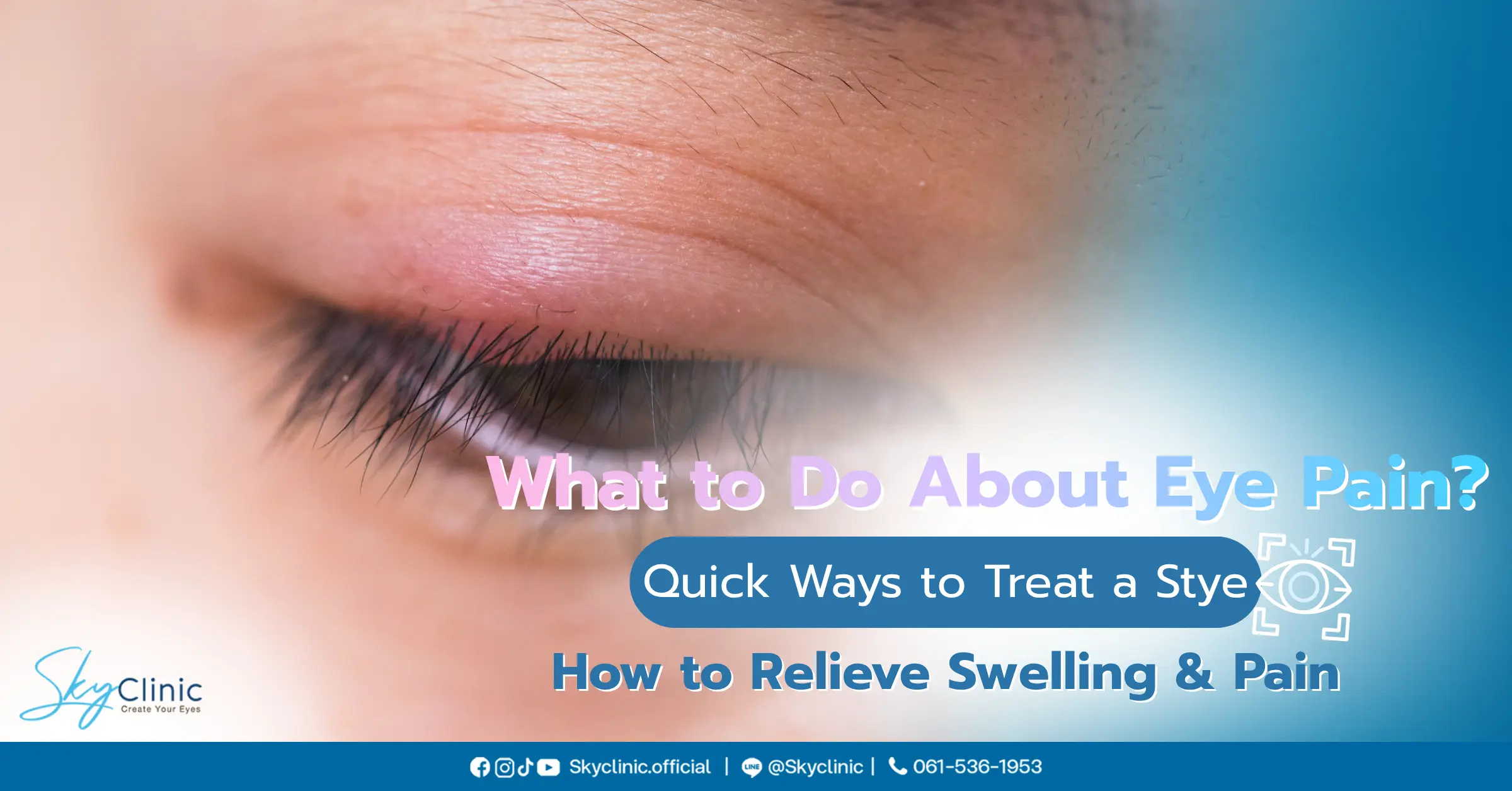
Urgent Stye Treatments to Reduce Swelling Quickly Without Scarring




Pain, swelling, and redness around the eyelid can be uncomfortable and may affect daily life. Many people experience these symptoms and seek prompt treatment for a stye to relieve the pain. This article explores the causes of styes and proper eye care methods that may help reduce swelling and minimize the risk of scarring.
How to Recognize Stye Symptoms That Need Prompt Attention
Before seeking prompt treatment for a stye, it is important to assess the initial symptoms and determine their severity. Evaluating the appearance of the red bump and the level of pain can help you choose an appropriate approach to care and treatment. Let’s look at the symptoms that require prompt attention.
A Red, Swollen, Painful Bump with Pus on the Eyelid
One of the first noticeable symptoms is a raised, red bump along the eyelid margin or on the inner surface of the eyelid. It is often accompanied by pain or tenderness when touched. Over time, a yellow or white pus-filled spot may appear in the center of the bump. Swelling, pain, and pus buildup may indicate inflammation of an eyelid gland. Proper care from this early stage may help relieve symptoms and prevent the swelling from worsening.
Other Symptoms That May Occur
In addition to a red, swollen bump, other symptoms may occur, such as itching or irritation and a persistent sensation that dust or debris is in the eye. This may cause redness and excessive tearing. Some people may also experience light sensitivity or discharge around the base of the eyelashes. These symptoms may result from inflammation affecting the tissues around the eye. Recognizing these accompanying symptoms can help you assess the situation and take timely steps to relieve irritation.
Severe Eyelid Swelling, Intense Pain, or Vision Changes
If the bump grows large enough to cause the eyelid to swell shut, the pain becomes severe, or vision changes occur, such as blurred vision, these warning signs should not be ignored. Do not attempt to squeeze or puncture the bump yourself. You should seek prompt assessment and appropriate care from an ophthalmologist to help prevent the infection from spreading to the surrounding tissues.
Urgent Stye Treatment When Symptoms Do Not Improve with Home Care

If warm compresses and basic home care have not relieved the swelling and pain, or the pus-filled bump is getting larger, seeking prompt treatment from an ophthalmologist is the appropriate next step. Let’s explore the treatment options an ophthalmologist may recommend to help relieve inflammation.
Medical Assessment of the Stye
When you visit an ophthalmologist, the first step is a thorough examination of the stye. The doctor will assess its size, location, and degree of eyelid inflammation, as well as check for any associated complications. A careful assessment helps the ophthalmologist develop a treatment plan and select an appropriate treatment based on your eye condition.
Eye Drops, Eye Ointments, and Other Medications
If the inflammation can be managed with medication, the ophthalmologist may prescribe antibiotic eye drops or ointment to treat a bacterial infection and help relieve redness and swelling. Following the ophthalmologist’s instructions carefully can help the symptoms gradually improve. In some cases, if the pain is significant, the doctor may also recommend pain relief medication.
When Pus Has Accumulated
If the bump is large and contains a substantial amount of pus that does not drain on its own with medication, the ophthalmologist may consider draining it. The doctor will clean the eyelid area and carefully open the bump using appropriate medical instruments to drain the pus. This treatment may relieve pressure within the bump, reduce pain and swelling, and support proper wound healing.
How Many Days Does a Stye Take to Heal?
The recovery time depends on the severity of the condition and how it is managed. In general, the red bump and pain may resolve on their own within 4–5 days to 1–2 weeks. Initially, the bump appears raised and red before a pus-filled head develops and may drain. Applying warm compresses regularly can help soften the blockage and encourage drainage, allowing the bump to gradually shrink.
Frequently Asked Questions About Styes
When experiencing eyelid pain and swelling, many people have questions about proper treatment and care. We have compiled some frequently asked questions to provide basic guidance and address concerns about what to do when the eyelid becomes inflamed or a red, swollen bump appears.
Can a Stye Heal on Its Own?
A small, mild stye may shrink and heal on its own. Keeping the eyelid clean and applying warm compresses can help the stye drain naturally. However, if the swelling does not improve or the pain becomes more severe, you should see an ophthalmologist for further assessment and appropriate care.
How Long Should You Apply a Warm Compress to a Stye?
Soak a clean cloth in comfortably warm water, or use a warm tea bag, and place it over the eyelid for approximately 10–15 minutes. Repeat this 3–5 times a day. The warmth can help soften the blockage, encourage drainage, reduce swelling, and relieve discomfort.
Can You Wear Contact Lenses When You Have a Stye?
You should avoid wearing contact lenses until the inflammation has completely resolved. Wearing contact lenses may increase the risk of bacterial contamination and worsen irritation. Wear glasses temporarily to minimize irritation, and wait until your eyes have returned to normal before wearing contact lenses again.
Summary

Regularly monitoring symptoms and caring for your eyes properly are important. Applying warm compresses is an initial home treatment for a stye, but if symptoms do not improve, you should consult an ophthalmologist. If you are looking for an Eye Surgery Clinic to address other eyelid concerns, you can consult an ophthalmologist at Sky Clinic. The clinic offers Double Eyelid Surgery, Medial Epicanthoplasty, Ptosis Correction, Subbrow Lift, Under-Eye Bag Removal Surgery, and Endoscopic Brow Lift Surgery to provide treatment tailored to your individual concerns.
Source : -