


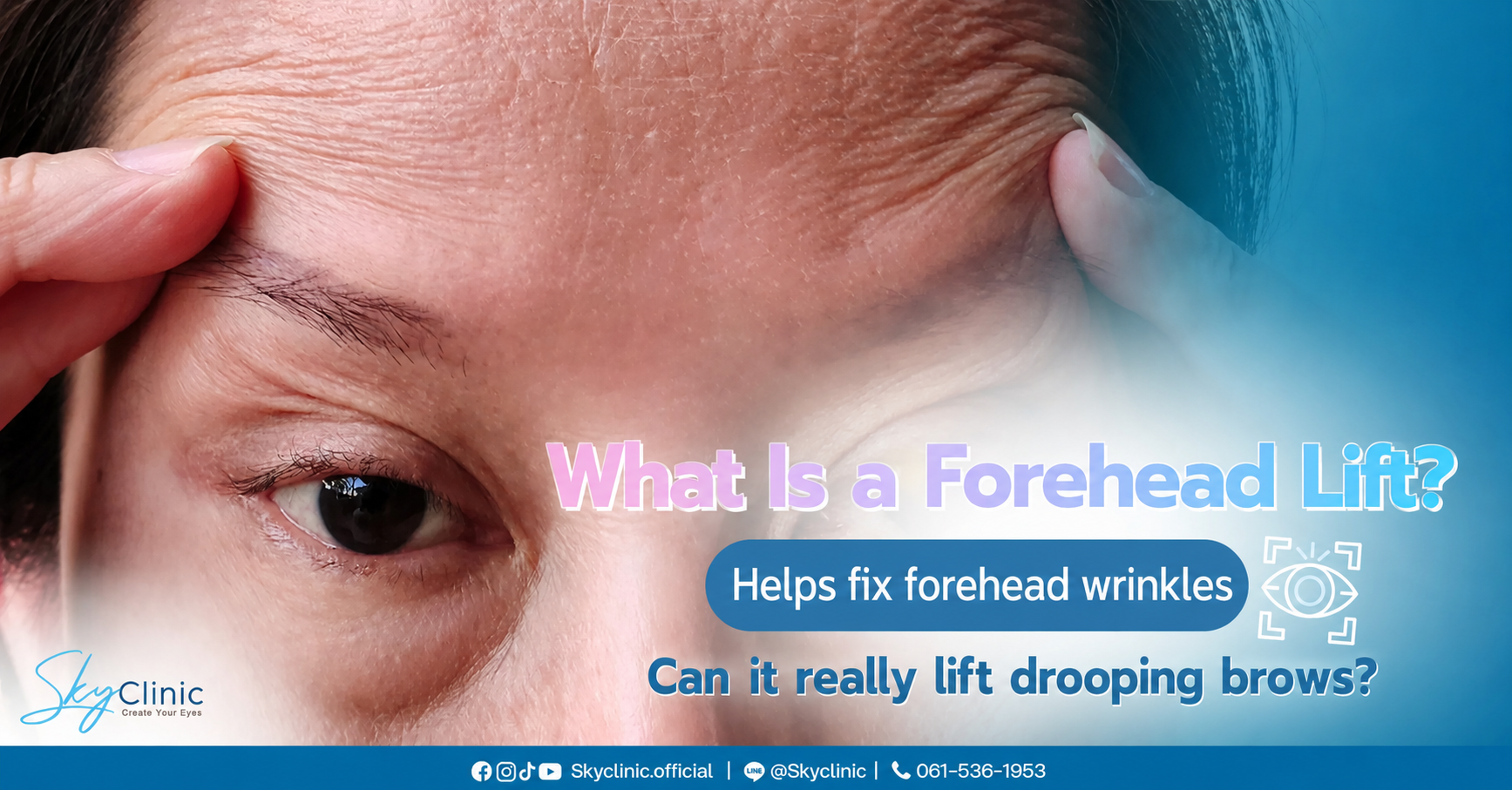
Forehead Lift: A Solution for Wrinkles and Sagging Brows




As we age, facial sagging gradually becomes more noticeable, especially in the upper part of the face, where deep wrinkles and drooping eyebrows commonly occur. These issues can make the face appear older and less refreshed. As a result, many people begin looking for ways to address these concerns, and one of the most popular options is a forehead lift. However, the question remains: “What exactly is this procedure, and can it effectively target these problems and help restore a more youthful appearance?” This article provides the answer to help you understand before making a decision.
What Is a Forehead Lift?
A forehead lift is a surgical procedure designed to tighten and reposition the skin and muscles in the upper part of the face. This treatment is designed to address age-related laxity and sagging, focusing on reducing deep, visible wrinkles and repositioning drooping brow tissue to a more youthful position. As a result, a forehead lift helps improve the overall appearance of the face, making it look more refreshed, youthful, and naturally balanced.
How Many Methods Are There for a Forehead Lift?
Currently, medical technology has advanced significantly, providing a variety of forehead lift options to suit each individual’s skin condition and concerns. Forehead lift procedures can generally be divided into several popular techniques, each with its own advantages and post-treatment care requirements, as detailed below.
Surgical Forehead Lift
The traditional surgical forehead lift involves making an incision along the hairline to tighten sagging skin and muscles while removing excess skin. This method is suitable for individuals with significant forehead sagging and clearly visible deep wrinkles. Although it requires a longer recovery time compared to other methods, the results are more pronounced and long-lasting. It is considered an effective option for improving upper facial sagging and deep forehead wrinkles.
Endoscopic Brow Lift
An endoscopic brow lift is a modern and highly popular technique. A small camera is inserted through tiny incisions along the hairline to guide the procedure and provide a clear view of the internal structure. This method minimizes tissue trauma, resulting in smaller incisions, less bleeding, and a shorter recovery time. In addition, the scars are well hidden, and this technique provides natural-looking results while effectively improving wrinkles and drooping brows.
Non-Surgical Forehead Lift
For those who are not ready to undergo surgery, a non-surgical forehead lift is an alternative option. This approach involves using energy-based devices that deliver energy into the deeper layers of the skin to stimulate collagen production, or injecting botulinum toxin (Botox) to relax the muscles that cause wrinkles. These methods help reduce the appearance of wrinkles and improve skin firmness without incisions or downtime. However, repeated treatments may be required to maintain the results over time.
What Problems Can a Forehead Lift Surgery Address?
Many people may wonder whether undergoing this procedure is truly worthwhile and whether it can effectively address their concerns. A forehead lift is designed to treat a range of issues in the upper face that can impact one’s confidence. The following are the concerns that can be addressed:
Sagging Forehead
Sagging of the forehead occurs as collagen and elastin in the skin gradually deteriorate over time, causing the skin to lose its elasticity and begin to droop. A forehead lift helps reposition and tighten the skin and muscles in this area, helping the forehead appear smoother and firmer. This results in a more open and naturally defined upper facial structure.
Forehead Wrinkles

Forehead wrinkles are often caused by repeated facial expressions over a long period of time, eventually forming deep lines that remain visible even when the facial muscles are relaxed. A forehead lift helps tighten and reposition the underlying tissues and muscles, making deep wrinkles appear softer and smoother. It is an effective solution for deeply set wrinkles that skincare products or general treatments may not be able to fully address.
Drooping Eyebrows and Sagging Outer Eye Corners
Drooping eyebrows and sagging outer eye corners can make the face appear tired and older than its actual age. A forehead lift acts as a direct brow lift, helping to raise the lowered brow position back to an appropriate level. This opens up the eye area, making the eyes appear more open and refreshed. In addition, it can be combined with a Subbrow Lift to more precisely address sagging in the eyelid area for more refined results.
An Aged and Tired-Looking Face
When multiple factors in the upper face, such as sagging skin, deep wrinkles, and drooping eyebrows, come together, they can make the overall appearance look tired, aged, and less vibrant. A forehead lift helps restore a more youthful facial structure by repositioning and lifting the upper face, creating a fresher and more rejuvenated appearance. In addition to helping the face look younger, it can also enhance self-confidence in both social interactions and daily life.
Is a Forehead Lift Dangerous?
All surgical procedures may carry some level of risk. However, a forehead lift is generally considered a safe procedure when performed by a skilled and experienced surgeon. Common risks are typically limited to normal temporary swelling and bruising, which gradually subside on their own. It is important to choose a reputable clinic with modern medical equipment and to strictly follow the doctor’s instructions both before and after the procedure to minimize the risk of infection and achieve optimal results.
How to Prepare Before Undergoing a Forehead Lift Procedure?
Proper preparation is an important step that helps ensure the surgery goes smoothly, reduces risks, and allows the body to be ready for recovery afterward. You should understand and strictly follow the guidelines below.
Apply cold compresses during the first 72 hours by using a cold gel pack around the incision area to help reduce swelling.
Sleep with your head elevated above heart level during the first week to help reduce swelling and fluid retention.
Avoid heavy activities, including heavy lifting or exercise that may affect the surgical site, for the first 2-4 weeks.
Clean the incision area strictly according to the doctor’s instructions, and avoid getting the incision area wet during the initial period.
Why Choose a Forehead Lift At Sky Clinic?
Choosing where to undergo surgery is of the utmost importance. At Sky Clinic, we have a team of specialist ophthalmologists with extensive and in-depth knowledge of the upper facial and eye structure. This allows for highly accurate facial assessment and forehead lift procedures, with attention to every detail, with attention to every detail to deliver precise, natural-looking, and safe results tailored to each patient’s concerns.
Frequently Asked Questions About Forehead Lifting
Before deciding to undergo facial contouring surgery, many people often have various questions and concerns. Therefore, we have compiled frequently asked questions about forehead lifting, along with clear answers, to provide initial information to help with your decision-making process, as follows:
Is forehead lifting surgery painful, and how long is the recovery period?
During forehead lifting surgery, either local anesthesia or general anesthesia is used, so you will not feel any pain during the procedure. After the surgery, you may experience tightness and mild soreness around the incision area, which can be managed with pain medication prescribed by the doctor. The initial recovery typically takes around 1-2 weeks. Swelling and bruising will gradually subside, and you can return to your normal daily activities once the wound has started to heal properly.
How long do the results of a forehead lift last?
Results from a surgical forehead lift are generally long-lasting. In some cases, the effects may last around 5-10 years, even longer, depending on the surgical technique used, individual aftercare, original skin condition, age, and the natural loss of collagen over time. However, maintaining proper skincare and a healthy lifestyle can help prolong the results and help maintain them for longer.
At what age can you undergo a forehead lift?
There is no fixed age requirement for a forehead lift, as sagging and wrinkles can occur at different ages for each individual. Generally, most patients who undergo this procedure are aged 40 and above. However, for some people who experience early forehead wrinkles or have a genetic tendency for low or drooping brows, it is also possible to consult a specialist to assess suitability starting from around the age of 30.
Summary

Forehead lifting is an effective procedure that helps rejuvenate the upper face. It can address deep wrinkles, skin sagging, and drooping eyebrows, helping restore a fresher and more youthful appearance. Choosing the appropriate technique and following proper aftercare can help achieve beautiful, safe, and long-lasting results, while also restoring confidence. For those interested, you can consult with the specialised ophthalmologists at Sky Clinic, who have expertise in Double Eyelid Surgery, Medial Epicanthoplasty (Inner Corner Opening), Ptosis Correction (Weak Eyelid Muscle Correction), Subbrow Lift, Endoscopic Brow Lift, and Under-eye Fat Removal, ensuring a treatment plan tailored to your individual needs.
Source : -