


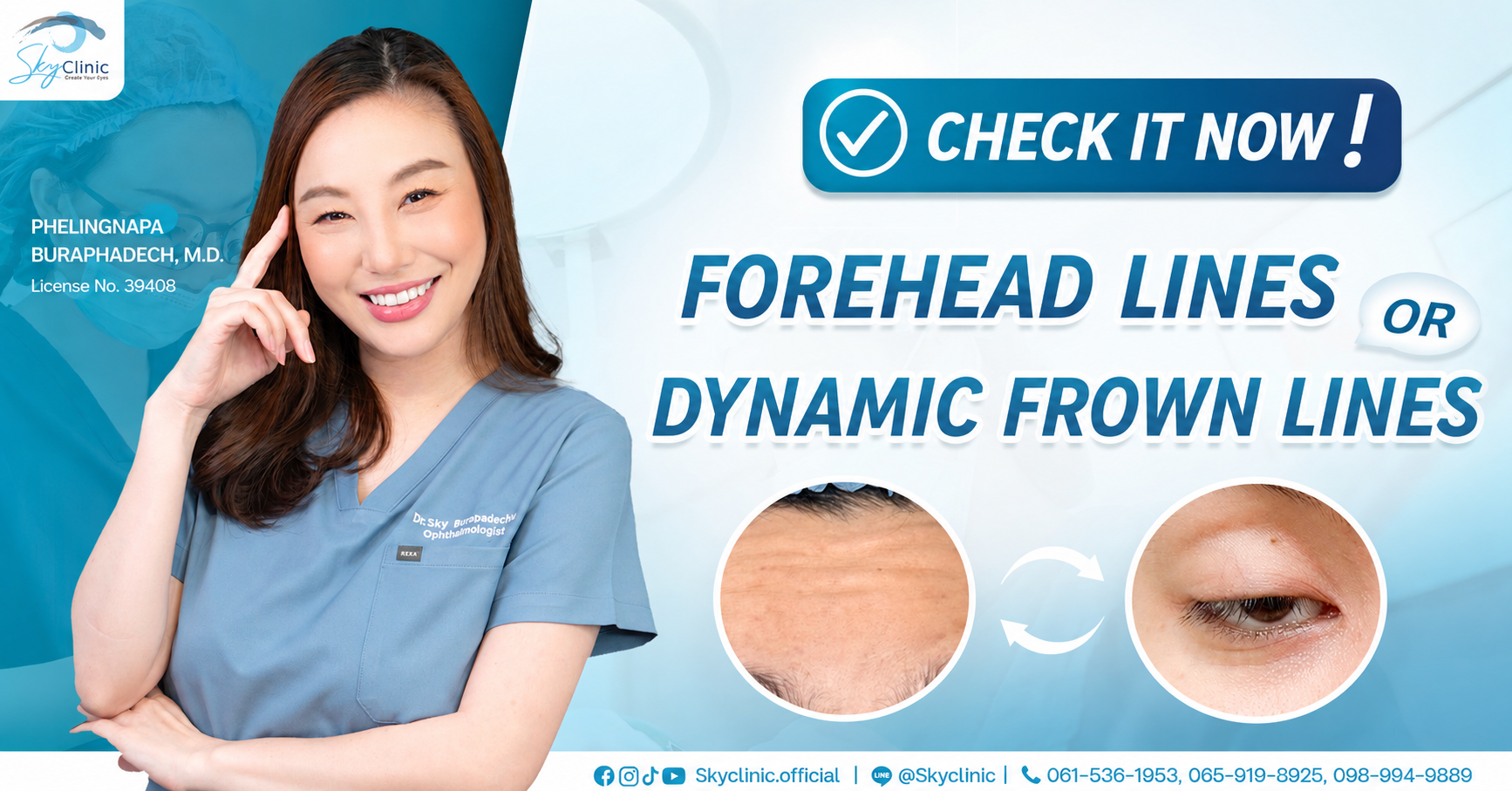
Forehead Wrinkles or Weak Eyelid Muscles? How to Identify the Real Cause




Forehead Wrinkles or Weak Eyelid Muscles
Have you ever noticed that you need to “lift your forehead” every time you open your eyes? Or have you ever experienced forehead Botox injections and felt that your “eyes look droopier and your eyebrows appear lower,” affecting your confidence? Many people may think these are simply signs of wrinkles or aging. However, in reality, these symptoms may be indicating something you have overlooked: weak eyelid muscles (Ptosis). If you have started to wonder whether you may have this condition, this article will help you learn more about it and find the answers together.
How Is Ptosis Related to the Forehead?
Many people may not know that weak eyelid muscles and forehead muscles are closely related. When the muscles responsible for lifting the eyelids become weakened, the eyelids may droop and block vision, or make it feel difficult to fully open the eyes. The body therefore tries to compensate automatically by using the forehead muscles to pull upward, helping the eyes open more. As a result, many people have to “raise their eyebrows” or “lift their forehead” all the time without realizing it. This condition not only affects eye comfort but may also cause forehead wrinkles to appear earlier than usual. Therefore, when Botox is injected into the forehead area, which works by blocking the activity of these muscles, the result is that the body cannot lift the forehead to help open the eyes. This causes some people to feel that their “eyes look droopy,” “eyebrows look lower,” or that they have more difficulty opening their eyes. As a result, they may try harder to raise their eyebrows or open their eyes wider than before. This can be another reason why Botox loses its effectiveness faster, and wrinkles return sooner.

How to Observe Symptoms of Weak Eyelid Muscles or Ptosis
The eyelids droop and partially cover the eyes, making it difficult to fully open the eyes
Difficulty opening the eyes, feeling that the eyes are tired, or constantly appearing sleepy
Needing to use the forehead muscles to help open the eyes, such as unconsciously raising the eyebrows
Droopy eyelid symptoms may become more noticeable after prolonged use of the eyes or during the afternoon–evening
Ptosis Correction Surgery
In cases where weak eyelid muscles affect vision or confidence, Ptosis Correction surgery is a popular treatment often performed together with double eyelid surgery. It can effectively correct problems caused by weak eyelid muscles. The procedure strengthens or adjusts the position of the muscles responsible for lifting the eyelids. This helps improve eyelid elevation, allowing the eyes to open wider and reducing sleepy-looking eyes or vision obstruction caused by drooping eyelids. In some cases, patients with excess eyelid skin or sagging eyelids may also undergo eyelid skin trimming as part of the procedure. After ptosis correction surgery, patients can open their eyes more easily without relying on the forehead muscles to help lift the eyes. This results in greater eye comfort, a brighter overall facial appearance, reduced forehead wrinkles caused by frowning or constantly raising the forehead, and less need for frequent forehead Botox injections to compensate for these issues.
Example of Ptosis Patients Who Received Surgical Treatment at Sky Clinic by Specialist Ophthalmologists

Sweet Eyes Technique: Upper Lid Blepharoplasty Combined With Ptosis Correction Surgery

Sweet Eyes Technique: Upper Lid Blepharoplasty Combined With Ptosis Correction Surgery
If you suspect that you may have weak eyelid muscles (Ptosis), receiving an evaluation from a specialized ophthalmologist can help you clearly understand the problem and choose the most suitable treatment approach. For those who are interested, you can consult with the experienced ophthalmologists at Sky Clinic, who specialize in Double Eyelid Surgery, Epicanthoplasty (inner corner eye opening), Ptosis Correction (weak eyelid muscle adjustment), Subbrow Lift, and Under-Eye Fat Removal Surgery, to receive treatment that is appropriate for your specific concerns.
Source : Sky Clinic