


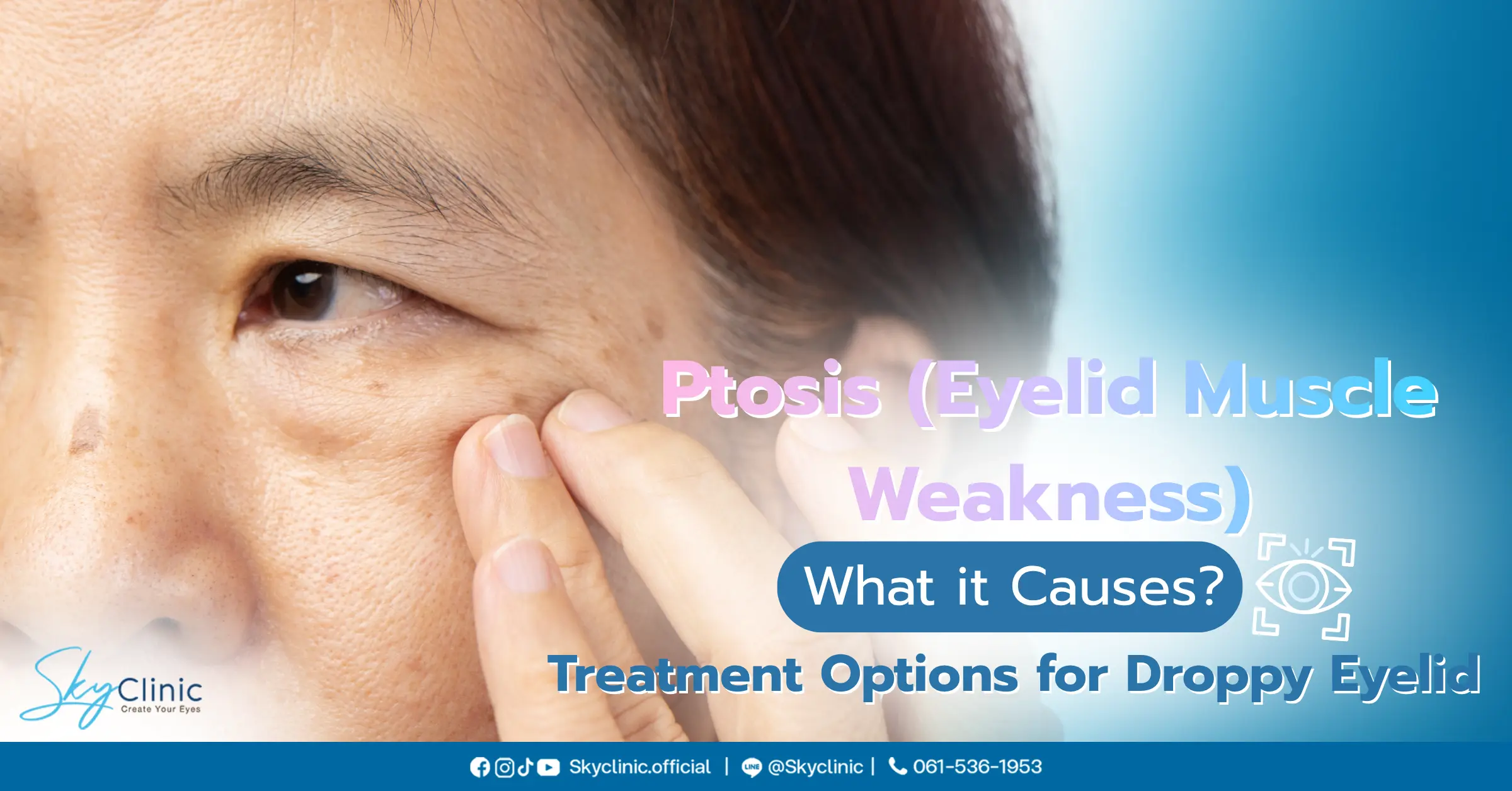
Ptosis: Causes and Treatment Options for Drooping Eyelids




Have you ever wondered why your upper eyelids appear droopy or why you have difficulty opening your eyes fully? These symptoms may be associated with ptosis, a condition in which the upper eyelid sits lower than normal. If you want to understand what causes ptosis, including eyelid muscle weakness, this article explores its potential causes, treatment options, and appropriate care to help you make informed decisions about your eye health.
What Causes Ptosis?
Drooping upper eyelids or difficulty opening the eyes fully can be concerning for many people. To understand what causes ptosis, it is helpful to first understand the structure and function of the eyelids. Ptosis can develop for several reasons, depending on the underlying cause. Let's explore some of the most common causes.
Congenital Ptosis
Congenital ptosis is a condition in which the upper eyelid droops from birth. Congenital ptosis occurs when the muscle responsible for lifting the eyelid develops abnormally while the baby is still in the womb. As a result, the child may have droopy eyelids or difficulty opening the affected eye fully. The condition may affect one or both eyes. An ophthalmologist will evaluate the child's vision and determine whether treatment is needed, particularly if the drooping eyelid obstructs vision and may affect visual development.
Age-Related Weakening of the Eyelid Muscles
As we age, various changes occur throughout the body, including the structures around the eyes. Age-related ptosis commonly develops when the levator muscle's supporting tendon stretches or becomes detached from its attachment to the eyelid, reducing its ability to lift the upper eyelid effectively. As a result, the upper eyelid may droop and partially cover the eye. This condition typically develops gradually and is a common cause of acquired ptosis in older adults.
Neurological or Autoimmune Disorders
In some cases, drooping eyelids are not caused by a structural problem with the eyelids themselves. Ptosis may be associated with neurological disorders or autoimmune conditions, such as myasthenia gravis (MG), which affects communication between nerves and muscles. These conditions can impair muscle function and cause the upper eyelids to droop. In myasthenia gravis, symptoms may fluctuate and become more noticeable later in the day or after prolonged activity.
Eye Injuries or Previous Eye Surgery
Injuries to the face or eyes can affect the structures that support and control the eyelids. Ptosis may also develop after eye surgery as a postoperative complication. This can occur due to changes in the eyelid's supporting structures, stretching or disinsertion of the levator muscle's tendon, or, less commonly, nerve or muscle injury. If drooping eyelids develop after an injury or surgery, assessment by an ophthalmologist is important to identify the underlying cause and determine appropriate treatment.
Habits That Cause Eye Fatigue
Modern lifestyles often involve prolonged use of computers and smartphones, which can lead to eye strain and visual fatigue. Although these habits do not directly cause ptosis, frequent eye rubbing may contribute to stretching or loosening of the delicate eyelid tissues over time. Avoiding excessive eye rubbing and taking regular breaks from screen use can help reduce eye discomfort and support overall eye health.
Complications After Double Eyelid Surgery
People who have previously undergone double eyelid surgery may experience drooping of the upper eyelid in some cases. This can occur when surgery affects the structures that support or control the eyelid, including the levator muscle or its tendon. Other postoperative concerns, such as uneven eyelid creases, may also occur but do not necessarily indicate ptosis. An ophthalmologist should carefully assess the eyelid structure and function to identify the underlying cause and determine the most appropriate treatment or revision approach.
How to Check for Ptosis Yourself

Before seeing an ophthalmologist, you can initially observe your eyes for signs of abnormalities. These symptoms often develop gradually and may affect daily life. Check whether your eyes show any of the following warning signs so that you can seek appropriate care and assessment promptly.
Asymmetrical Eyes: Observe whether both eyes open to the same extent. One eye may appear droopier or more closed than the other, making the overall facial appearance look unbalanced.
Multiple Eyelid Creases: When the eyelid muscles do not function fully and the eyelid tissues become lax, multiple overlapping eyelid creases may develop. These creases can look irregular and make the face appear older.
Raising the Eyebrows to See More Clearly: When drooping eyelids partially cover the eyes, you may frequently raise your eyebrows or wrinkle your forehead to help open your eyes wider. This is a compensatory response to reduced eyelid muscle function.
Upper Eyelid Drooping Over the Iris: The upper eyelid droops and covers more of the iris than normal, making the eyes appear smaller and giving them a constantly tired or sleepy appearance.
Blurred Vision and Temple Pain: Repeatedly focusing your eyes or exerting effort to keep them open for prolonged periods may cause tension around the eyes, leading to headaches or blurred vision.
Eyes Becoming Tired Quickly: When looking at screens or reading for long periods, your eyes may become tired more quickly than usual. You may find it difficult to keep your eyes open and frequently feel the need to close them and rest.
Reduced Field of Vision: In more severe cases, drooping eyelids may obstruct the upper field of vision, narrowing the visible area and interfering with daily activities.
How Does Ptosis Affect You?
Ptosis can make the face look tired and affect self-confidence. When drooping eyelids obstruct vision, people may tilt their heads back or raise their eyebrows to see more clearly. Over time, these movements may contribute to forehead tension and discomfort in the neck, shoulders, and upper back. Ptosis may also cause eye fatigue and interfere with daily activities.
What Are the Treatment Options for Drooping Eyelids?
If you experience droopy eyelids or difficulty opening your eyes, it is important to consult an ophthalmologist for an assessment of your eyelid structure. The appropriate treatment depends on the underlying cause and severity of the condition. Let’s explore the treatment options currently available to help improve eyelid structure and function.
Treating the Underlying Cause When Associated with a Medical Condition
When ptosis is caused by a neurological disorder or an immune system abnormality, an ophthalmologist will work with other medical specialists to assess and manage the underlying condition. Once the primary disease is appropriately controlled, eyelid muscle function may gradually improve.
Levator Muscle Surgery
For people whose ptosis is related to the structure of the eyelid, an ophthalmologist may consider levator muscle surgery. This technique addresses the levator muscle or its tendon when it has become stretched or detached from its original attachment, helping restore its ability to lift the eyelid. This treatment may help reduce eyelid drooping, improve eye opening, and expand the field of vision.
Combining with Double Eyelid Surgery When Appropriate
In some cases, an ophthalmologist may consider combining levator muscle surgery with eyelid crease refinement, particularly for people with significant eyelid laxity or excess fat around the eyelids. Treating both concerns at the same time can help create a more defined eyelid crease, enhance the appearance of the eyes, and give the face a fresher look. This approach addresses the overall eyelid structure to achieve a result that harmonizes with the face.
Why Consult Sky Clinic for Ptosis Correction?
Sky Clinic has ophthalmologists who provide consultations and carefully assess eyelid structure to identify the underlying cause of ptosis. The doctors select techniques suited to each individual’s eyelid structure and provide attentive care at every stage, from initial assessment to follow-up. The goal is to achieve an eye shape that complements the face, improve eyelid opening, and help boost confidence in daily life.
Frequently Asked Questions About Ptosis
Before seeking treatment for eyelid problems, many people have questions about the symptoms and assessment process. We have compiled frequently asked questions to provide basic information, help you better understand the condition, and ease your concerns before consulting an ophthalmologist to discuss your symptoms and determine the next steps in your care.
Can Ptosis Resolve on Its Own?
In most cases, ptosis does not resolve on its own, especially when it is caused by age-related changes or structural abnormalities affecting the eyelid muscles. The condition may remain stable or gradually worsen over time. If you notice drooping eyelids, you should consult an ophthalmologist for an assessment and appropriate treatment recommendations.
What Is the Difference Between Ptosis and Eyelid Skin Laxity?
Drooping eyelids caused by ptosis occur when the muscles responsible for lifting the upper eyelids do not function properly. In contrast, eyelid skin laxity occurs when the skin around the eyelids becomes loose and droops over the eyelid crease. Some people may have both conditions. An ophthalmologist can assess the eyelids to distinguish between the causes and develop an appropriate treatment plan to address the underlying structural concerns.
Do Droopy Eyelids Need Treatment if Vision Is Still Normal?
Even if your vision remains normal, droopy eyelids may affect your appearance, make your face look tired, and lead to frequent eyebrow raising, which may contribute to forehead wrinkles. If you feel that the condition affects your self-confidence, consulting an ophthalmologist about eyelid correction may be an option to enhance the appearance of your eyes.
Summary

Droopy eyelids can affect both self-confidence and daily life. Understanding the causes of ptosis can help you recognize the symptoms and consult an ophthalmologist in a timely manner. Choosing an appropriate treatment technique can help address eyelid structural concerns. If you are looking for an eye surgery clinic to address eyelid concerns, you can consult an ophthalmologist at Sky Clinic, which offers Double Eyelid Surgery, Medial Canthoplasty, Ptosis Correction, Subbrow Lift, Under-Eye Bag Removal Surgery, and Endoscopic Brow Lift Surgery to determine a treatment approach suited to your individual needs.
Source : -