


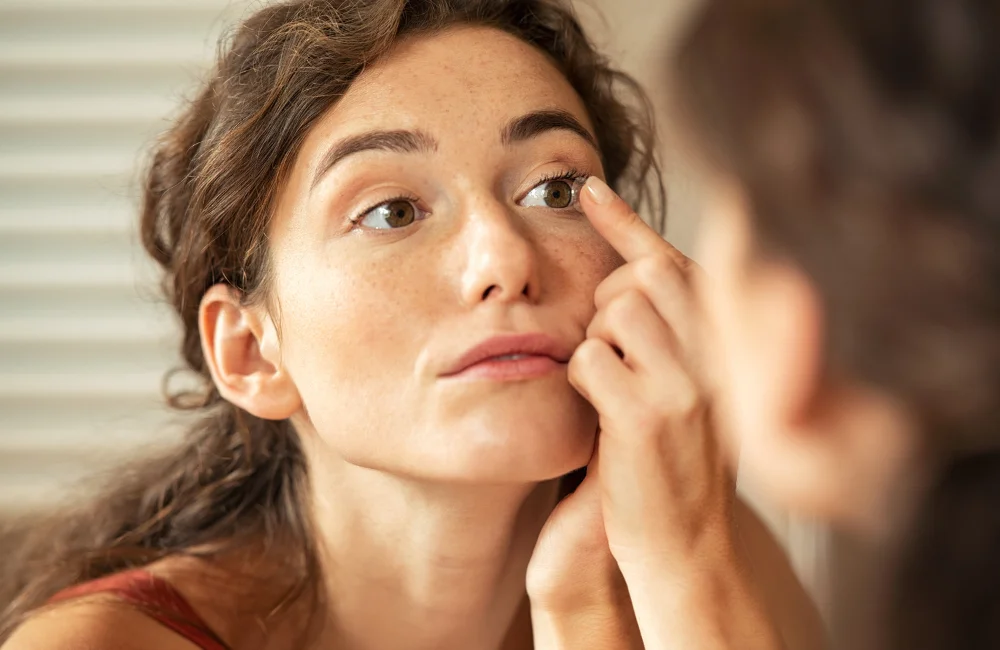
Keep your eyes safe: Sleeping with contact lenses on is more dangerous than you think.




Contact lenses are a popular choice for people with vision problems, especially teenage girls who want convenience. And want to enhance their appearance, many choose to wear contact lenses instead of glasses. However, due to this convenience, some people neglect proper care, even to the point of sleeping with contact lenses in. This behavior can have more serious consequences for the eyes than you think, including infections and dry eyes. Today, Sky Clinic will help you understand the dangers of sleeping with contact lenses in. Along with proper care methods for long-term eye health.
Whywear contact lenses to sleepNo
The main reason why we shouldn't wear contact lenses to sleep, whether it's sleeping at night or even napping during the day, is: The following:
The eyes need oxygen
The eyes are vital organs that require sufficient oxygen to function effectively. Wearing contact lenses while sleeping significantly reduces the amount of oxygen your eyes receive. This is because, in addition to the contact lenses blocking the flow of oxygen, sleeping with them on all night further deprives the cornea of oxygen, resulting in redness, irritation, and an increased risk of infection.
Risk of Eye Infection
Sleeping with contact lenses on increases the risk of eye infections. 18-20 out of 10,000 people who sleep with contact lenses on develop eye infections. Most are bacterial infections (Bacterial Keratitis), which cause inflammation of the cornea. If left untreated, Additionally, there is a risk of fungal infections and Acanthamoeba that can damage the eyes. This may lead to loss of vision.
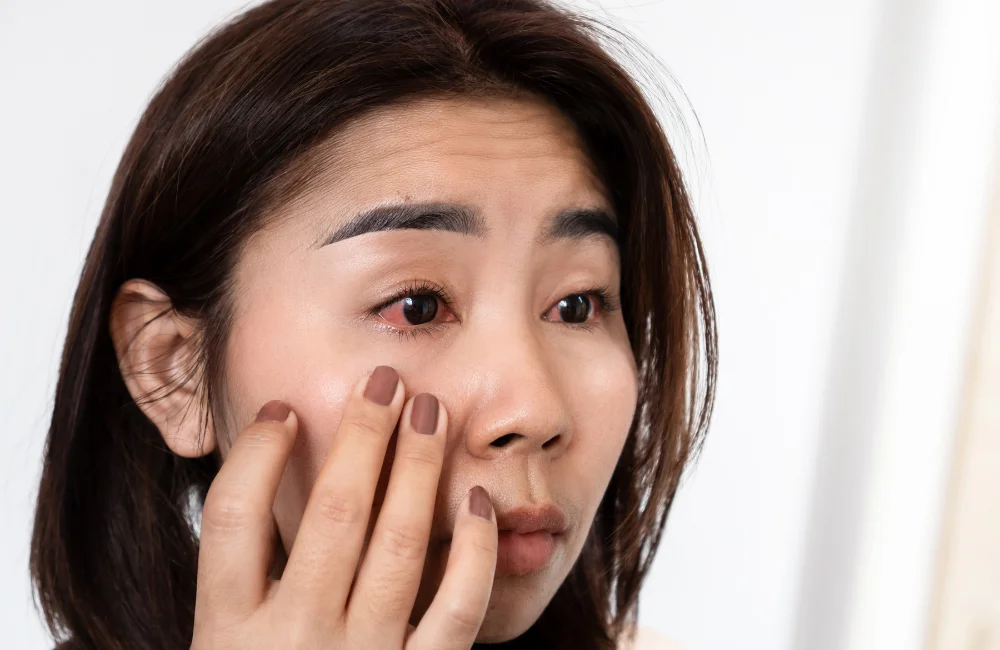
Dry Eyes
Sleeping with contact lenses can lead to severe dry eye because it disrupts the natural production and distribution of tears. Normally, the eyes have mechanisms to maintain moisture through blinking and tear production, but when contact lenses are worn while sleeping, the cornea is dehydrated and not adequately lubricated, causing itching. Burning and discomfort in the eyes after waking up.
Corneal ulcer
While we sleep. The eyes move rapidly during REM sleep. Wearing contact lenses while sleeping causes the lens to constantly rub against the cornea, resulting in irritation and corneal abrasions. In severe cases, the contact lens may become dislodged and lodge behind the eyeball, causing serious injury and inflammation. Immediate treatment from an ophthalmologist is necessary.
How to Properly Remove and Insert Contact Lenses
Proper contact lens care is extremely important for eye health. This can be easily followed as follows:
- Wash your hands thoroughly with soap and dry them completely before touching the lenses every time.
- Use the appropriate lens solution to clean and soak your lenses daily, changing the solution each time. Never use plain water or saline solution instead of contact lens solution.
- Clean the contact lens case regularly to prevent the accumulation of germs.
- Do not use your fingernails to remove contact lenses from your eyes.
- Do not rub your eyes while wearing contact lenses.
Contraindications for Wearing Contact Lenses
- Never wear contact lenses while sleeping, even if they are labeled as safe.
- Avoid wearing lenses while swimming as this increases the risk of infection.
- Do not share lenses with others to prevent the spread of germs.
- Discontinue use immediately if you experience any abnormal symptoms such as redness, itching, or irritation. For example
Frequently Asked Questions
1. How many hours can I wear contact lenses?
2. Does wearing contact lenses really make the pupils smaller?
3. Is it okay to nap while wearing contact lenses?
4. Why do my eyes get red when wearing contact lenses?
Red eyes after wearing contact lenses can be caused by several factors, such as an allergy to lens solution, infection, dry eye syndrome, or wearing unclean lenses. If you experience red eyes, you should remove the lenses immediately and use artificial tears to relieve the symptoms. If symptoms do not improve, you should see an ophthalmologist for diagnosis and appropriate treatment.
5. Wear contact lenses. What should you avoid?
When wearing contact lenses, avoid activities that risk infection or eye irritation, such as swimming, showering, using cosmetics that may get into your eyes, sleeping, being in dusty environments, and rubbing your eyes. And you shouldn't wear contact lenses for more than 8-10 hours a day.
6. Blurred vision after wearing contact lenses Is something wrong?
Blurred vision after wearing contact lenses is another warning sign that shouldn't be ignored. It may be caused by unclean lenses, protein buildup, or lens deterioration. In severe cases, it can lead to corneal ulcers or eye infections.
Summary
Sleeping with contact lenses on is extremely dangerous to eye health, leading to oxygen deprivation, infection, dry eye, or corneal injury. Contact lens users should prioritize proper hygiene and remove lenses before going to bed every night to prevent serious eye damage.
Source : -