


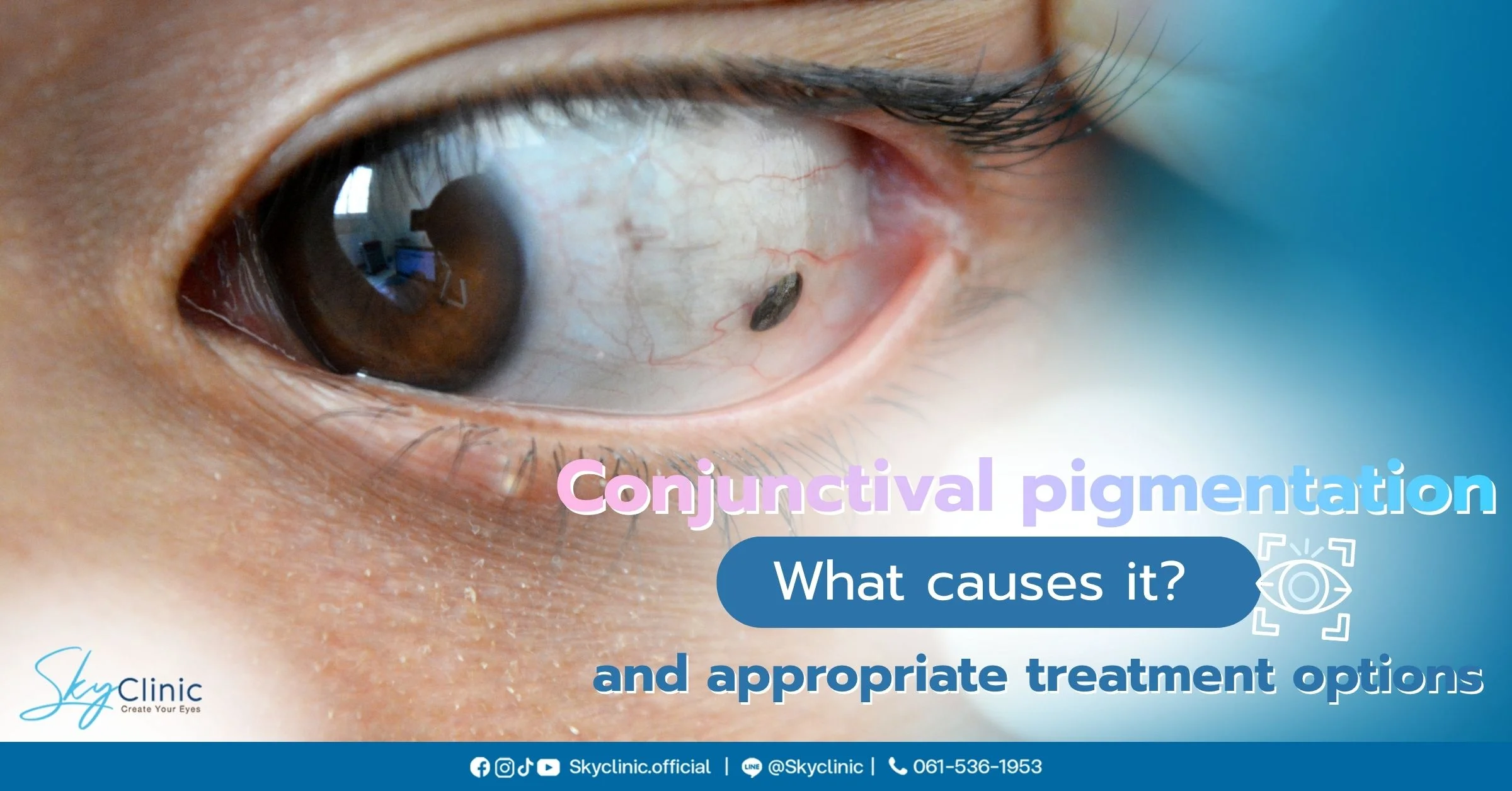
Black Spot on the White of the Eye: Causes, Treatment, and Long-Term Prevention




Noticing an unusual change in the eyes can be worrying, especially when you discover a black spot on the white of the eye. You may wonder whether it is a sign of a serious disease or could affect your vision. Although these spots are often harmless, understanding their causes and how to care for them properly is essential for maintaining eye health with confidence. This article explores the topic in detail to address common concerns and provide appropriate guidance on managing these black spots.
What Is a Black Spot on the White of the Eye?
A black spot on the white of the eye may appear as a brown, gray, or black mark caused by pigmentation on the conjunctiva. These may appear as small spots or larger patches. They may be caused by an increased number or activity of melanocytes (pigment-producing cells), which can lead to increased pigmentation on the surface of the eye. Most are benign growths, but some cases may require diagnostic evaluation to rule out other conditions, especially if the spot shows noticeable changes in shape or appearance.
Causes of Black Spots on the White of the Eye
Black spots or pigmented patches on the white of the eye do not appear without a cause. Several factors can trigger pigment accumulation. Understanding the underlying causes can help you assess potential risks and distinguish between normal conditions and lesions that require closer attention. The main causes can be categorized as follows.
Conjunctival Nevus
This is the most common cause of black spots on the white of the eye. It resembles a mole on the skin and develops when pigment-producing cells cluster together. It is often first noticed during childhood or adolescence. The mole may become darker during puberty or pregnancy. It may appear as a slightly raised or flat spot and can move along with the conjunctiva. Although it is a benign growth, it should be monitored regularly for changes. If its size remains stable and it does not cause any discomfort, it is generally considered harmless.
Physiological Melanocytosis
This condition is commonly found in people with darker skin tones, including many people of Asian descent. It occurs when melanin accumulates in the conjunctival tissue at higher-than-normal levels. It typically appears as flat brown or gray patches scattered across the whites of both eyes, often around the iris. This type of pigmentation is a normal physiological variation rather than a disease. It does not affect vision and does not require treatment, although it may make the whites of the eyes appear less bright from certain angles.
Acquired Melanosis
This condition differs from a congenital mole because it typically develops for the first time in adulthood. It appears as a flat brown patch that usually affects only one eye and may gradually spread over a wider area. It requires particular attention because certain forms of acquired melanosis may be associated with an increased risk of melanoma, a type of cancer. Therefore, any new brown patch appearing on the white of the eye during adulthood should be evaluated by an ophthalmologist
Foreign Bodies or Environmental Irritation
Sometimes, spots on the white of the eye may be caused by external factors rather than pigmentation. Chronic irritation from wind, dust, or sunlight can lead to pinguecula or pterygium, which may appear darkened. Tiny particles of dust or debris can also become embedded in the eye. In addition, certain eye drops containing silver compounds or the use of eye makeup may cause pigment deposits to develop. Maintaining good eye hygiene and avoiding environmental pollutants can help reduce these risks.
Warning Signs That a Black Spot on the White of the Eye May Be Dangerous
Although most black spots are harmless, you should not ignore any unusual changes. Regularly monitoring the appearance of the spot is essential. If you notice any of the following warning signs, consult an ophthalmologist promptly for a thorough evaluation, as early treatment generally leads to better outcomes.
Spot Increases in Size
If you notice that a black spot or mole in the eye grows rapidly over a short period, it may be a cause for concern. Ordinary moles generally remain relatively stable in size or grow only slightly as the body develops. However, if a spot spreads noticeably or becomes significantly raised during adulthood, this may indicate abnormal cell growth, which can be a feature of a lesion that may develop into a malignancy.
Changes in Color
Color consistency is an important indicator. If a black spot develops uneven pigmentation, with some areas becoming darker or nearly black, others becoming lighter, or multiple shades appearing within the same lesion (variegated color), this is an important warning sign. In addition, an unusual increase in blood vessels around the spot, causing it to appear red or bruised, may indicate changes in the lesion and should be evaluated promptly by an ophthalmologist.
Irregular or Poorly Defined Borders
Harmless moles or black spots typically have smooth, well-defined borders that contrast clearly with the white of the eye. However, if a lesion develops rough or uneven edges, or its borders become blurred as though the pigment is spreading into the surrounding tissue (irregular borders), this may indicate abnormal pigment cell growth. This is a clinical feature that doctors may use to assess the risk of malignancy. Therefore, if the borders of a black spot become poorly defined, you should consult an ophthalmologist promptly.
Treatment for Black Spots on the White of the Eye by an Ophthalmologist

Currently, there are safe and effective treatment options for black spots on the white of the eye, both for cosmetic reasons and medical purposes. An ophthalmologist will assess each individual to determine the most appropriate approach based on the size, location, and risk level of the lesion. The main treatment options include:
Laser Treatment (Laser Photoablation): This technique uses laser energy to target pigmented tissue while aiming to minimize damage to the surrounding structures. It is a minor procedure that does not require an overnight hospital stay, allowing patients to return home immediately afterward. The procedure is generally minimally painful because topical anesthetic eye drops are applied beforehand.
Surgical Excision: This option is suitable for larger or raised moles, or when a lesion is suspected of being malignant. Removing the lesion may leave a tissue defect that requires a graft for reconstruction. The doctor may use conjunctival tissue taken from another area of the patient's own eye or an amniotic membrane to repair the defect. Many ophthalmologists prefer amniotic membrane grafts for larger wounds to preserve the patient's own conjunctival tissue for potential emergencies or other complications in the future.
Preventing the Risk of Black Spots on the White of the Eye
Although some causes are related to genetics or natural changes, environmental factors can also contribute to the development of black spots or cause existing spots to become darker. Making lifestyle adjustments and practicing proper eye care can help reduce these risks and slow the deterioration of the conjunctiva over the long term.
Wearing Sunglasses
Ultraviolet (UV) radiation from sunlight is a major factor that can stimulate pigment-producing cells to become more active, much like the development of melasma on the skin. Wearing high-quality sunglasses that provide 100% UV protection whenever you are outdoors is therefore an important protective measure. It can help reduce the likelihood of developing new moles and prevent existing spots from becoming darker. Sunglasses also help protect against other eye conditions, such as pinguecula and pterygium.
Avoiding Wind and Dust
Regular exposure to strong winds, dust, smoke, or pollution can cause chronic irritation and inflammation of the conjunctiva, potentially stimulating the body to produce pigment or abnormal tissue as a protective response. Avoid areas with high levels of pollution whenever possible. If exposure cannot be avoided, wear protective eyewear and use artificial tears to flush away dust particles, keep the eyes moist, and reduce friction on the ocular surface.
Annual Eye Examinations
Eye examinations are not just for checking your vision; they also assess the overall health and structure of your eyes. Ophthalmologists can use a slit-lamp microscope to examine pigment abnormalities that may not be visible to the naked eye. Annual eye examinations help detect abnormalities at an early stage. If a black spot shows suspicious changes, the doctor can plan appropriate treatment promptly.
Frequently Asked Questions About Black Spots on the White of the Eye
Discovering something unusual in your eyes can raise many concerns. To help you understand the condition and know how to respond appropriately, here are answers to frequently asked questions about black spots on the white of the eye, so you can feel more reassured and make informed treatment decisions with greater confidence.
Can a Black Spot on the White of the Eye Become Malignant?
It is possible, but very rare. Many black spots are benign, such as nevi (moles) or harmless pigment deposits. However, certain types of acquired melanosis, particularly primary acquired melanosis (PAM) with atypia, have a higher risk of developing into melanoma, a type of cancer. Therefore, evaluation by a doctor is essential to identify the type of spot and accurately assess the risk.
What Should You Do If More Black Spots Appear?
If you notice new black spots appearing or an increase in the number of existing spots, make an appointment with an ophthalmologist for a thorough examination as soon as possible. Do not self-medicate with eye drops or leave the condition unchecked. The doctor may take photographs to establish a baseline and schedule follow-up appointments to monitor the rate of growth. Seeking medical attention early helps ensure that any changes are managed appropriately and safely.
Does Surgical Removal of a Black Spot Affect Vision?
Treatment for black spots on the white of the eye, whether by laser or surgery, involves a procedure on the conjunctiva, the outermost layer of tissue. It does not involve the cornea or retina, which play important roles in vision. Therefore, it generally does not affect your prescription or visual acuity. Once the wound has healed properly, you can resume your normal visual activities.
Summary

Most black spots on the white of the eye are harmless and result from pigment accumulation, which may be present from birth or develop later in life. The key is to monitor for warning signs. If treatment is needed, modern laser technology or surgical procedures may be options. For those with other concerns about eye shape who are looking for an Eye Surgery Clinic, you can consult a specialist eye surgeon at Sky Clinic. The clinic specializes in eye surgery, including Double Eyelid Surgery, Medial Epicanthoplasty, Ptosis Correction, Subbrow Lift, and Under-Eye Bag Removal Surgery, to receive treatment tailored to your concerns.
Source : -