


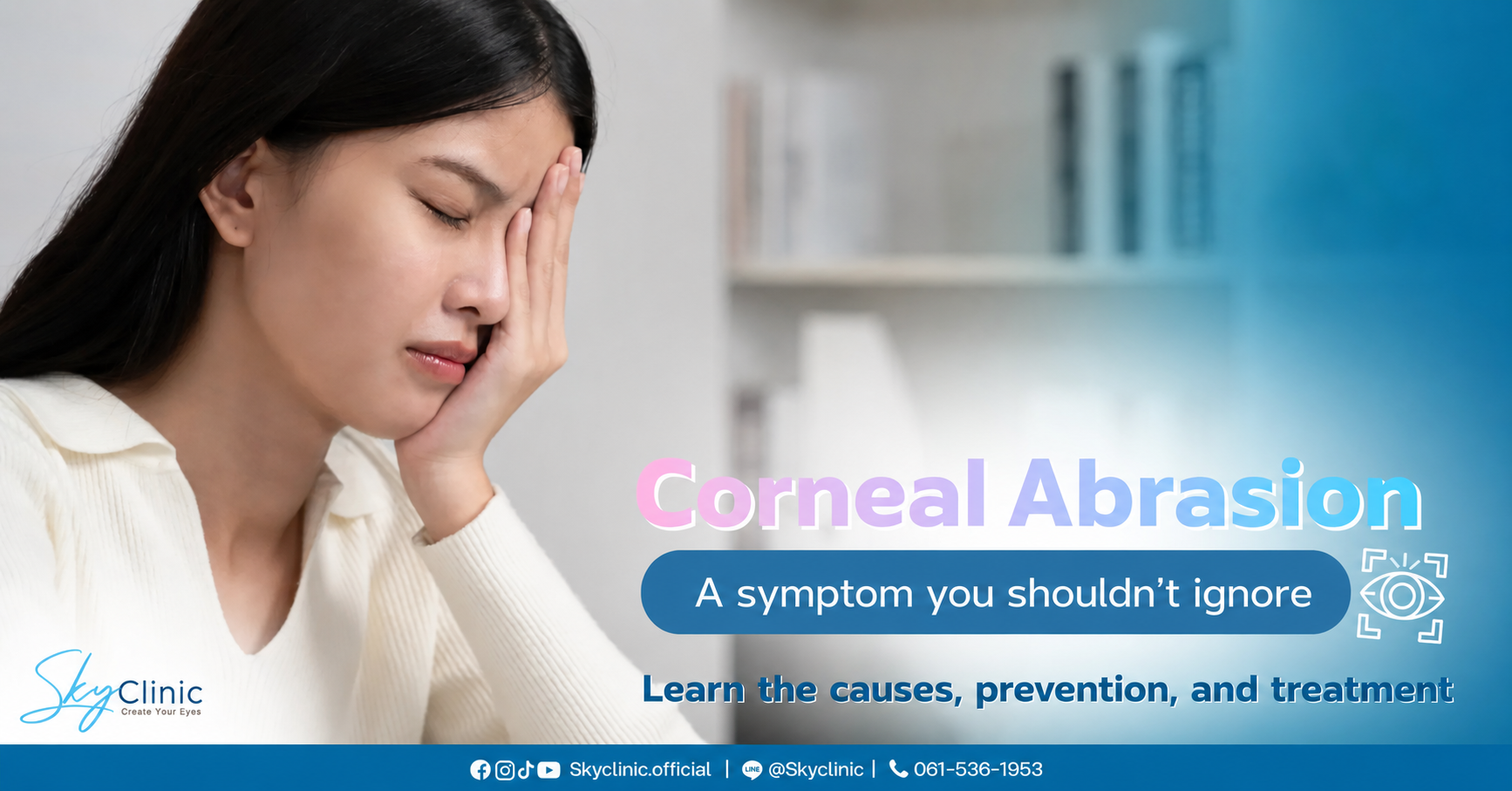
Corneal Abrasion: Symptoms, Healing Time, and Treatment Options




The eyes are delicate organs that play an essential role in daily life. Even minor abnormalities can cause discomfort and affect vision. One common condition that can be quite painful is a scratch on the surface of the cornea. Also known as a corneal abrasion. Many people may overlook it, assuming it is only a minor issue that will heal on its own. However, if left untreated or cared for improperly, it may lead to infection and potentially affect long-term eye health. In this article, Sky Clinic explains what causes corneal abrasion, how serious the condition can be, and the proper ways to care for and protect your eyes safely.
What Is a Corneal Abrasion?
Corneal abrasion is a condition in which the outermost layer of the cornea becomes scratched or damaged. The cornea serves as a clear protective window at the front of the eye. When this protective surface is injured, the sensitive nerve endings beneath the cornea become exposed to air, water, and external irritants, which can cause significant pain and irritation, even if the scratch itself is very small.
What Are the Symptoms of a Corneal Abrasion?
When the cornea is scratched, the body often shows clear warning signs. Common symptoms of corneal abrasion include the following:
Eye Pain and Irritation (Sensation of a Foreign Body in the Eye)
People with a corneal abrasion often experience sharp eye pain or irritation, along with a persistent sensation that sand, dust, or debris is trapped inside the eye. Even after rinsing the eye with water or eye drops, the discomfort may continue because the nerve endings on the corneal surface remain irritated.
Excessive Tearing, Redness, and Light Sensitivity
The eyes may produce excessive tears (watery eyes) as a natural response to help flush out any remaining irritants. At the same time, the small blood vessels in the eye may become enlarged, causing noticeable redness. In addition, people with corneal abrasions often develop light sensitivity (photophobia), experiencing discomfort or burning sensations when exposed to bright sunlight or even indoor lighting.
Blurred Vision
Normally, the cornea has a smooth and transparent surface that helps refract light properly, functioning much like a camera lens. When the corneal surface becomes scratched or uneven, light entering the eye is scattered or distorted, which can cause vision to become blurry, unclear, or difficult to focus.
Swollen Eyelids or Eyelid Twitching
In some cases, severe irritation may lead to eyelid swelling due to inflammation or trigger involuntary eyelid twitching. This is a natural protective response of the muscles around the eyes, attempting to reduce further friction or irritation to the injured corneal surface.
What Causes a Corneal Abrasion?

Corneal abrasions can occur from many everyday factors, including environmental exposures, daily habits, or underlying physical conditions. The most common causes include the following:
Dust or Foreign Particles Entering the Eye
Exposure to dust, smoke, debris, or airborne particles, such as during construction work, motorcycle riding, or gardening, can increase the risk of foreign objects entering the eye. If these particles come into contact with the cornea and create friction, they may cause a corneal abrasion.
Rubbing the Eyes Too Hard or Eye Injury
Habitual or forceful eye rubbing when experiencing itchiness or irritation is one of the major causes of corneal injury. Corneal abrasions may also result from accidental trauma to the eye, such as scratches from fingernails, contact with makeup tools, or impacts to the face during sports activities.
Improper Contact Lens Use
Contact lens wearers are at higher risk of corneal injury if lenses are not cared for properly. This includes using unapproved or low-quality lenses, sleeping while wearing contact lenses, cleaning them inadequately, or continuing to use lenses that are torn or damaged. These factors can create continuous friction against the corneal surface, eventually causing scratches that may progress into corneal abrasions.
Eye Infections or Ocular Diseases
Eye infections caused by bacteria, viruses, or fungi in the eye can weaken the structure of the corneal surface, making it more fragile than normal. As a result, even minor contact or friction may easily lead to corneal surface damage or epithelial peeling. In addition, individuals with conditions in which the eyelids do not close completely are also at higher risk, as the corneal surface may become dry and more vulnerable to injury.
Dry Eye Conditions or Underlying Medical Conditions
People with dry eye syndrome have insufficient tear lubrication, which can lead to increased friction and irritation during blinking or eye rubbing. As a result, the corneal surface becomes more vulnerable to injury. In addition, individuals with allergic eye conditions often experience frequent itching and may rub their eyes repeatedly, which can further contribute to corneal surface damage and increase the risk of corneal abrasions.
Is a Corneal Abrasion Dangerous?
This condition should not be ignored. If the injury is only a superficial scratch and receives proper treatment, the cornea can usually heal on its own without leaving a scar. However, if the abrasion is large, deep, or contaminated with bacteria or foreign debris, it may lead to secondary infection and progress into a corneal ulcer, which is significantly more difficult to treat. If left untreated, the condition may result in corneal scarring or clouding, and in severe cases, it can lead to long-term vision impairment or permanent vision loss.
Treatment Guideline for Corneal Abrasion
When abnormalities of the cornea occur, evaluation and care by an ophthalmologist are the safest and most appropriate approaches. Treatment methods are selected based on the severity of the condition and each individual’s ocular anatomy. In general, management may include the following steps:
Use of Eye Drops and Antibiotics
Doctors often prescribe antibiotic eye drops or ophthalmic ointments to help prevent secondary bacterial infections at the site of the corneal abrasion. In addition, medications to reduce pain or inflammation may also be recommended to relieve discomfort and improve comfort during the healing process.
Eye Patching to Reduce Friction
In cases where the corneal abrasion is large or accompanied by severe light sensitivity, the doctor may recommend covering the affected eye with a protective eye patch. This helps reduce friction from repeated blinking and allows the corneal surface to heal more effectively and comfortably.
Use of Artificial Tears to Increase Eye Moisture
Using preservative-free artificial tears as recommended by an ophthalmologist helps lubricate the surface of the eye, reduce dryness, and minimize friction between the eyelids and the cornea. It also helps flush out small irritants, allowing the corneal surface to heal more effectively.
Symptom-Based Treatment and Ongoing Follow-Up
For individuals who regularly wear contact lenses or have deeper corneal abrasions, doctors will usually schedule close follow-up appointments to monitor the healing process and detect any potential complications. Follow-up care continues until the corneal surface has fully recovered and returned to a smooth and healthy condition.
How Long Does a Corneal Abrasion Take to Heal?
Recovery time mainly depends on the severity and size of the abrasion. If it is only a superficial scratch affecting the outer epithelial layer, corneal cells can regenerate and heal quickly. In general, symptoms improve, and the eye returns to normal within 1–3 days. However, if the abrasion is large, deep, or caused by severe trauma, recovery may take several weeks. In such cases, close monitoring and careful treatment under an ophthalmologist’s supervision are required.
How to Prevent Corneal Abrasion from Recurring?

Preventing repeated injury to the cornea is the best way to protect eye health. The risk can be reduced by improving daily habits through the following practices:
Avoid Rubbing Eyes
When experiencing eye itching or when dust or foreign particles enter the eye, you should gently rinse your eyes with sterile saline solution or clean water instead of rubbing them with your hands. Rubbing can press the foreign object against the corneal surface, increasing friction and potentially causing more severe corneal injury.
Wear Protective Eyewear in High-Risk Environments
If you work in dusty environments, construction sites, or machinery-related occupations, or participate in contact sports or activities with a risk of eye injury, you should always wear safety goggles or protective eyewear to protect your eyes from foreign particles and potential injury.
Proper Contact Lens Use
Choose contact lenses that meet safety standards, avoid sleeping while wearing them, clean them properly using an appropriate contact lens solution, and replace them according to the recommended schedule. These practices help prevent lens deterioration and reduce protein buildup that may cause irritation or friction.
Maintain Hand and Eye Hygiene
Wash your hands regularly and keep your fingernails trimmed to reduce the risk of transferring germs or bacteria to the eyes when touching your face or eyes. In addition, use caution when handling eye makeup tools to ensure that sharp edges or tips do not accidentally scratch the corneal surface.
When Should You See an Ophthalmologist Immediately?
If you experience an eye injury, severe eye pain, significant redness, persistent tearing, double vision, or sudden blurred vision, you should seek immediate evaluation by an ophthalmologist. Avoid self-medicating with eye drops, as some formulations may contain steroids that can worsen corneal injury or increase the risk of serious infection. A proper medical examination using specialized equipment helps ensure an accurate diagnosis and safe, appropriate treatment.
Eye Care Recommendation from Sky Clinic
Taking care of eye health from within is important, but the external appearance of the eyes also plays a significant role in overall facial aesthetics and self-confidence. Even after recovery from certain eye conditions, some cosmetic concerns may remain, such as droopy eyelids, uneven eyelid creases, or under-eye fat that can make the face appear tired or aged. Consulting an eye surgery clinic supervised by an experienced ophthalmologist is a valuable option, as it allows for a thorough assessment of the eye structure and surrounding areas. Sky Clinic is committed to providing personalized guidance and treatment options to help enhance the appearance of the eyes, creating a brighter and more youthful look naturally while maintaining high standards of safety and care.
Frequently Asked Questions About Corneal Abrasion
To address common concerns and provide basic guidance on managing eye conditions, we have compiled answers to frequently asked questions about corneal care.
Can a corneal abrasion heal on its own?
If the abrasion is only a very small scratch, it may heal on its own. However, it is strongly recommended not to use eye drops without medical advice, as doing so may increase the risk of infection and complications. The safest approach is to have the abrasion examined by an ophthalmologist and receive appropriate treatment.
Can you wear contact lenses with a corneal abrasion?
You should strictly avoid wearing contact lenses until the corneal surface has fully healed and healing has been confirmed by an ophthalmologist. Wearing contact lenses can trap bacteria against the eye and increase friction, potentially delaying recovery and increasing the risk of serious infection.
How can corneal abrasion be prevented?
The simplest and most effective ways to prevent corneal abrasion include avoiding eye rubbing, wearing protective eyewear to shield the eyes from dust and wind during outdoor activities, and maintaining proper hand hygiene as well as the cleanliness of any tools or products that come into contact with the eyes.
Summary
Corneal abrasion is a common eye condition that can occur during everyday activities. Although it often begins as a minor injury, improper care may lead to complications that can affect vision. Recognizing warning signs, avoiding high-risk behaviors, and seeking prompt evaluation by an ophthalmologist when unusual symptoms arise are essential for maintaining healthy eyes, preserving clear vision, and protecting long-term visual and ocular health.
Source : -