


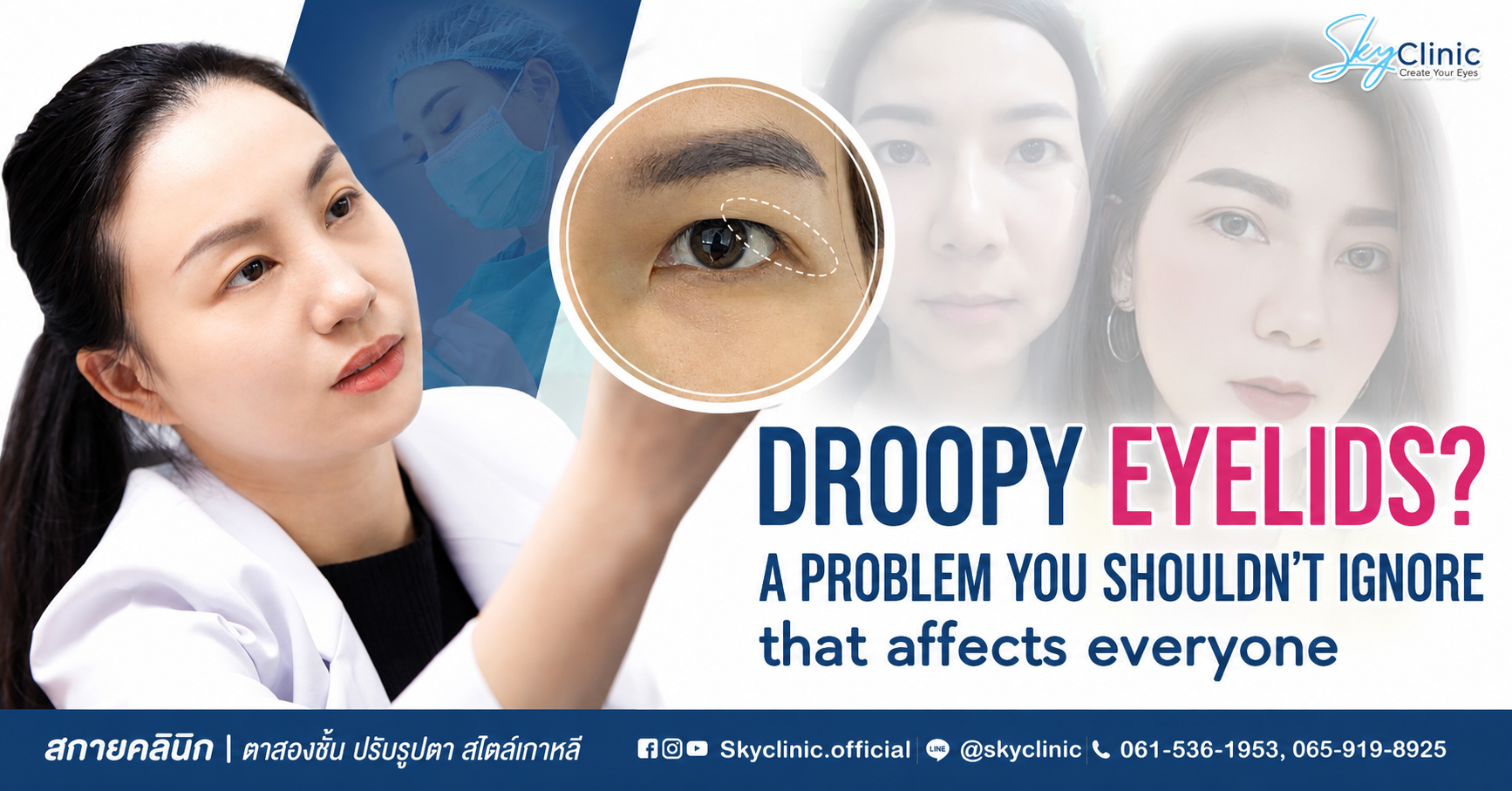
Droopy Eyelids: Causes and Treatment Options Explained




If you have dull-looking eyes, droopy eyelids, a constantly tired appearance, or feel that you look older than your actual age, the underlying cause may be excess upper eyelid skin that droops over the eyelid crease. This condition can affect not only your appearance and self-confidence but also your overall facial expression. Understanding the causes of droopy eyelids and the available treatment options is the first step toward achieving a more refreshed appearance and improved facial harmony. In this article, we explain the common causes of droopy eyelids and the available treatment options.
What Are Droopy Eyelids?
Droopy eyelids refer to a condition in which the upper eyelid sits lower than normal or excess upper eyelid skin covers part of the eye. This condition may be caused by age-related excess eyelid skin (dermatochalasis), weakness of the muscles responsible for lifting the upper eyelid (ptosis), or a combination of both. As a result, the eyes may appear smaller, asymmetrical, or tired. In more severe cases, the upper eyelid may partially obstruct the visual field, causing individuals to raise their eyebrows or tilt their head backward to see more clearly. Over time, this compensatory effort may contribute to forehead muscle fatigue and the development of forehead wrinkles.
What Causes Droopy Eyelids?
Droopy eyelids, in which the upper eyelid covers more of the iris than normal or excess upper eyelid skin droops over the eyelid, can result from a variety of causes and may require treatment depending on the underlying condition. The main causes can be classified as follows:
Excess Upper Eyelid Skin
It can occur even in younger individuals and may be influenced by genetic factors, natural eyelid anatomy, or ethnic characteristics. As a result, excess upper eyelid skin may droop over the eyelid crease, making the crease less visible and creating the appearance of monolids or hidden double eyelid creases.
Sagging Eyelids
Mainly caused by aging, which leads to reduced collagen and loss of elasticity in the skin and tissues around the eyes, resulting in sagging eyelids. In modern times, it is common to see people using double eyelid stickers. As a clinical experience, frequent use of double eyelid stickers is also another important cause of eyelid sagging. Droopy eyelids can be found in both young and older individuals and become more common with increasing age. The skin around the eyes, like other areas of the body, becomes saggy over time, causing the outer corners of the eyes to droop, making the face look older and more tired. It may also affect eye health, such as a feeling of heavy eyelids, eyelashes irritating the cornea, excessive tearing, or eye inflammation, and may even obstruct vision. Therefore, an important aspect of eyelid surgery for droopy eyelids is blepharoplasty to create a natural result that suits the eye shape.
Natural Ways to Treat Droopy Eyelids
For those who are beginning to feel concerned about the eye area, they often look for basic natural care methods to help support and improve the condition of the skin around the eyes, such as:
Eye massage: Lightly massaging around the eyebrows and upper eyelids may help promote circulation and relieve muscle tension.
Cold compress: Use a cooling gel or chilled tea bags to help reduce swelling and refresh the eye area.
Eye cream: Using products containing moisturising ingredients and peptides may help improve skin hydration and support overall skin quality around the eyes.
However, these measures provide only temporary cosmetic benefits and cannot correct significant droopy eyelids, excess upper eyelid skin, or weakened eyelid support structures. For individuals with moderate to severe eyelid sagging, medical or surgical treatment may provide more effective and longer-lasting results. The most appropriate treatment should be determined after evaluation by a specialist ophthalmologist.
Medical Treatments for Droopy Eyelids
Medical treatment for droopy eyelids includes a range of surgical techniques designed to address excess upper eyelid skin and restore eyelid function and appearance. The surgeon will evaluate the severity of the condition, the patient's eyelid anatomy, and individual treatment goals to determine the most appropriate treatment approach.
Skin Tightening Devices (Ulthera / HIFU)
High-intensity focused ultrasound (HIFU) delivers focused ultrasound energy to the deeper layers of the skin, where it stimulates collagen production and tissue remodeling. This may help improve mild skin laxity around the upper eyelids and outer eye area, resulting in a firmer appearance. It is most suitable for individuals with mild eyelid skin laxity.
Pros: Non-invasive, requires no incisions or needles, and involves little to no downtime.
Cons: Results are temporary and vary between individuals. HIFU cannot remove excess upper eyelid skin, reposition fat, or correct moderate to severe droopy eyelids.
Botox Injection for Lifting
The doctor injects botulinum toxin (Botox) to relax the muscles that pull the eyebrows downward (depressor muscles). This results in a slight lifting of the tail of the eyebrow and the outer eyelid area (chemical brow lift), making the eyes appear more open.
Pros: Quick results, short procedure time, and no surgical wounds.
Cons: Temporary results last about 4–6 months, provide only mild lifting, and cannot correct excess eyelid skin.
Eyelid Surgery (Blepharoplasty)

Droopy eyelid surgery is the most direct and definitive treatment for individuals with significant eyelid sagging or excess upper eyelid fat. The surgeon makes an incision along the eyelid crease to remove excess skin and fat, then creates a natural-looking eyelid crease.
Pros: Long-lasting results, directly addresses both aesthetic and functional concerns, and may also improve the visual field.
Cons: Swelling and bruising after the procedure, requires recovery time, and strict adherence to postoperative wound care instructions is necessary.
Pros: Long-lasting results, directly addresses both aesthetic and functional concerns, and may also improve the visual field.
Cons: Swelling and bruising after the procedure, requires recovery time, and strict adherence to postoperative wound care instructions is necessary.
Preparation Before and After Droopy Eyelid Surgery
To help ensure that droopy eyelid surgery goes smoothly, is performed safely, and achieves optimal results, proper preparation before and after the procedure is an important step that should be carefully followed.
Preparation Before Droopy Eyelid Surgery
Inform your doctor about your medical history, underlying medical conditions, and any drug allergies in detail.
Stop taking medications, supplements, and vitamins that may affect blood clotting, such as aspirin, vitamin E, and fish oil, at least 1–2 weeks before surgery, or as directed by your doctor.
Avoid smoking and consuming alcoholic beverages for at least 1–2 weeks before surgery to promote proper wound healing and reduce the risk of infection.
Get adequate rest and wash your hair before the day of surgery, as it may be difficult to do so during the initial recovery period.
Inform your doctor about your medical history, underlying medical conditions, and any drug allergies in detail.
Stop taking medications, supplements, and vitamins that may affect blood clotting, such as aspirin, vitamin E, and fish oil, at least 1–2 weeks before surgery, or as directed by your doctor.
Avoid smoking and consuming alcoholic beverages for at least 1–2 weeks before surgery to promote proper wound healing and reduce the risk of infection.
Get adequate rest and wash your hair before the day of surgery, as it may be difficult to do so during the initial recovery period.
Post-Operative Care After Droopy Eyelid Surgery
Apply cold compresses around the eyes regularly during the first 1–3 days to help reduce swelling and bruising.
Do not rub your eyes, and avoid getting the incision wet until the sutures are removed.
Avoid wearing contact lenses and applying eye makeup for the first 1–2 weeks after surgery.
Gently clean the incision with sterile saline solution as recommended by the clinic, and take all prescribed medications as directed by your doctor.
Apply cold compresses around the eyes regularly during the first 1–3 days to help reduce swelling and bruising.
Do not rub your eyes, and avoid getting the incision wet until the sutures are removed.
Avoid wearing contact lenses and applying eye makeup for the first 1–2 weeks after surgery.
Gently clean the incision with sterile saline solution as recommended by the clinic, and take all prescribed medications as directed by your doctor.
Why Choose Droopy Eyelid Surgery at Sky Clinic?
At Sky Clinic, the full-incision technique is combined with excess eyelid skin removal and fat adjustment to effectively correct droopy eyelids and excess upper eyelid skin, helping restore a more defined and refreshed appearance. This method enhances eyelid definition and creates a more youthful appearance. However, in cases with significant outer eyelid sagging or when brow lifting is needed, a Subbrow Lift (hidden-scar brow lift technique) may also be recommended. This helps achieve more comprehensive results and addresses the underlying cause of the problem. Key advantages include:

Frequently Asked Questions About Droopy Eyelid Surgery
Is droopy eyelid surgery painful?
During the procedure, the doctor will administer a local anesthetic, so you will not feel any pain during the surgery. After the anesthesia wears off, you may experience mild tightness or soreness, which can usually be relieved with prescribed pain medication.
During the procedure, the doctor will administer a local anesthetic, so you will not feel any pain during the surgery. After the anesthesia wears off, you may experience mild tightness or soreness, which can usually be relieved with prescribed pain medication.
Can young people with droopy eyelids undergo corrective surgery?
Corrective surgery can be performed if the doctor determines that there is a significant amount of excess eyelid skin due to genetic factors or if the droopy eyelid obstructs vision. In such cases, surgical techniques can be used to create a more defined eyelid crease and improve the appearance of the eyes.
Corrective surgery can be performed if the doctor determines that there is a significant amount of excess eyelid skin due to genetic factors or if the droopy eyelid obstructs vision. In such cases, surgical techniques can be used to create a more defined eyelid crease and improve the appearance of the eyes.
Is the result of droopy eyelid surgery permanent?
Removing excess eyelid skin through surgery provides long-lasting and relatively permanent results. However, as part of the natural aging process, the skin around the eyes may gradually lose elasticity and become loose.
Source : Dr.Sky Burapadecha