


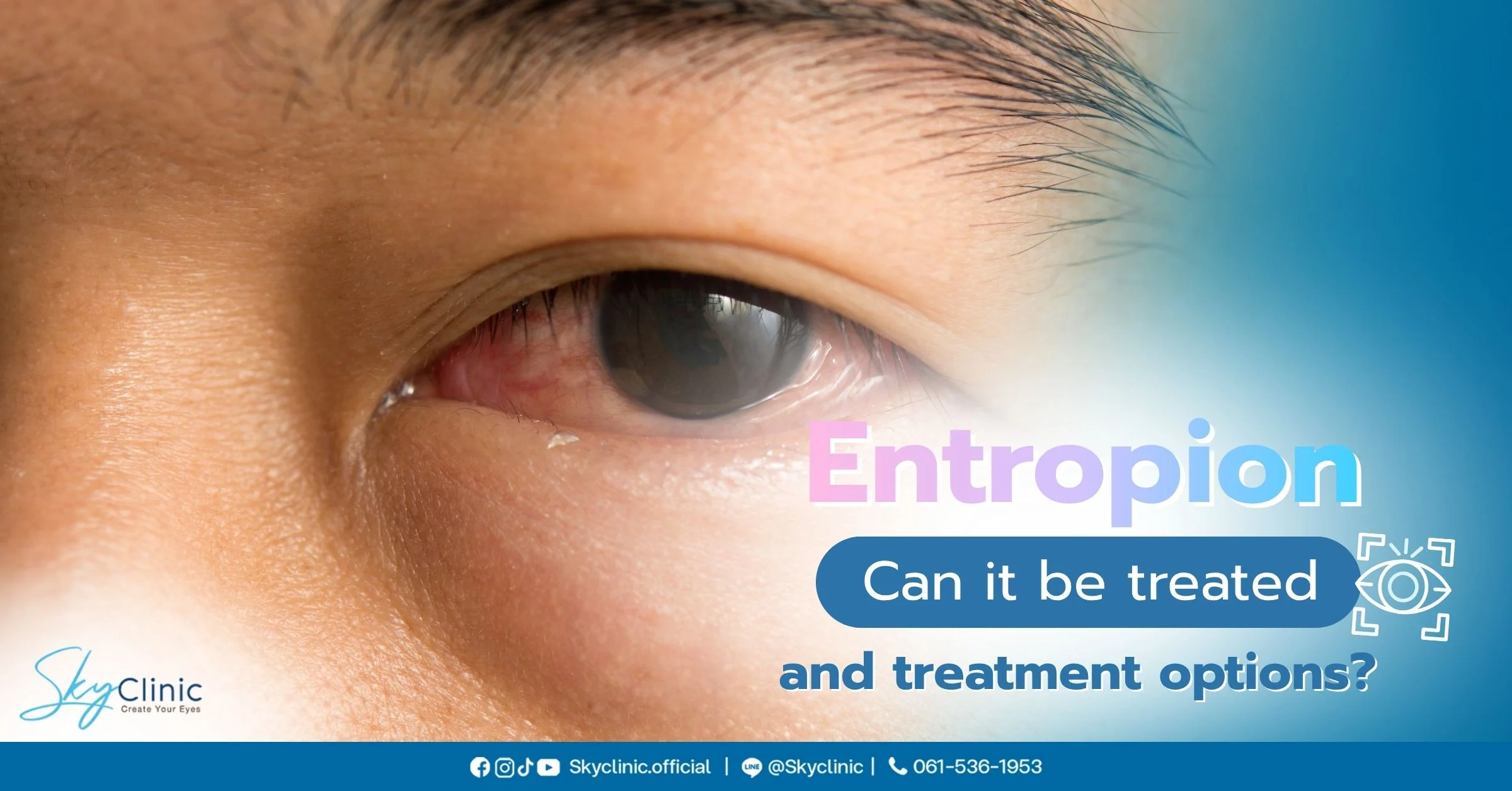
Entropion: Causes and Treatment Options Explained




Eye problems are not only about appearance or vision. The structural condition of the eyelids can also significantly affect quality of life, especially entropion (inward-turning eyelids), which can cause irritation and may damage the cornea without you realizing it. Many people may wonder what causes this condition and whether leaving it untreated could lead to serious complications. In this article, Sky Clinic will take you through the causes of entropion and the proper treatment options to help restore eye comfort and confidence.
What is Entropion?
Entropion is a condition in which the edge of the eyelid, whether the eyelid skin, lid margin, or eyelashes, turns inward toward the eye. As a result, the eyelashes and skin continuously rub against the cornea and the white part of the eye. This condition can occur in both the upper and lower eyelids. The severity can range from mild irritation to corneal inflammation and infection. If left untreated, it may eventually lead to long-term vision loss.
Symptoms of Entropion
- Feeling like something is stuck in the eye: You may feel as if there is sand, dust, or a foreign object in your eye due to the eyelashes rubbing against the eye surface.
- Redness and irritation: The white part of the eye may become red due to constant irritation and friction.
- Excessive tearing or eye discharge: Your eyes may produce more tears to protect themselves from irritation, causing watery eyes or excessive discharge.
- Severe sensitivity to light: Your eyes may become highly sensitive to sunlight or bright lights, making it difficult to keep them open.
- Blurred vision: If the cornea becomes scratched or develops ulcers due to eyelashes rubbing against it, vision may become blurry.
Main Causes of Entropion

This condition is not caused solely by behavior. Structural and age-related factors often play a major role.
Age-Related Degeneration: Weakened Eyelid Muscles and Ligaments
This is one of the most common causes in older adults. As we age, the tissues around the eyes, eyelid ligaments, and supporting muscles lose elasticity and become weaker. This reduces their ability to maintain proper eyelid positioning, causing the eyelid to turn inward.
Asian Eyelid Anatomy
Thai people and many Asians may experience entropion at a younger age due to genetic factors. Common characteristics include thicker eyelids, excess fat around the eyelids, or uneven eyelids. These factors can push the eyelid margin inward, causing the eyelashes to irritate the eye.
Weak Eyelid Muscles
In some cases, weakness of the muscles responsible for lifting the eyelids (Ptosis) can cause drooping eyelids that block vision and distort the eyelid margin, leading to inward turning. A proper diagnosis by an experienced ophthalmologist is important.
Scarring from Injuries
A history of severe eye infections such as trachoma, chemical burns, fire injuries, or complications from previous eye surgery can cause scar tissue to form. These scars may contract and pull the eyelid inward.
Treatment Options for Entropion
The main goal of treatment is to protect the cornea from damage and restore the eyelid to its proper position. Treatment options include both temporary relief and permanent correction.
Non-Surgical Treatments for Entropion Symptoms
For mild cases or temporary relief, treatment options may include:
- Using artificial tears to reduce friction
- Medical tape to pull the eyelid outward
- Botulinum toxin (Botox) injections to relax muscles that may be causing the eyelid to turn inward
However, these methods only provide temporary relief and do not permanently solve the problem.
Double Eyelid Surgery Combined with Weak Eyelid Muscle Correction
An effective and targeted solution is surgery. A skilled ophthalmologist will recommend double eyelid surgery to remove excess eyelid skin and fat that is pressing on the eyelids, along with adjusting the tension of the eyelid muscles and ligaments. This method helps to naturally turn the eyelashes outwards, corrects uneven eyelids, and makes the eyes appear brighter and more natural.
FAQs About Entropion
Can entropion heal on its own?
In most cases, no. Since the condition is usually caused by structural changes, it typically does not improve on its own and may worsen over time, leading to chronic corneal damage.
Is surgery painful, and how long is the recovery period?
At a qualified eye surgery clinic, local anesthesia is typically used, so patients usually do not feel pain during the procedure. Swelling and bruising may last around 1–2 weeks, and clearer results are typically visible within 1–3 months.
Can Botox permanently treat entropion?
No. Botox only temporarily reduces muscle tension. The results usually last around 4–6 months, and the eyelid may turn inward again unless structural correction surgery is performed.
Summary

Entropion is not a minor issue that should be ignored. Every moment that your eyelashes rub against your eyes can gradually damage your cornea. If you experience eye irritation, excessive tearing, or notice that your eyelids are turning inward, consulting a qualified ophthalmologist for diagnosis and proper treatment is the safest and most effective solution. At Sky Clinic, our experienced ophthalmologists specialize in oculoplastic surgery, including Entropion Correction, Ptosis Correction, and Double Eyelid Surgery. We prioritize both safety and natural-looking results to help you feel comfortable and confident again.
Source : -