


What Causes Proptosis?




Have you ever wondered why some people appear to have unusually wide or prominent eyes, or why your own eyes may seem more protruding than before when you look in the mirror? Proptosis, or bulging eyes, is more than a cosmetic concern that affects facial appearance, confidence, or creates a constantly startled look. In some cases, it may be an important warning sign of an underlying medical condition. In this article, Sky Clinic will explore the causes of proptosis, its potential risks and complications, and the appropriate treatment approaches to help you recognize abnormalities early and protect long-term vision.
Observable Signs of Proptosis
Many individuals may be unsure whether their eyes meet the criteria for proptosis, as the changes can develop gradually over time or, in some cases, appear more suddenly. Recognizing the visible signs of proptosis is important for early detection and appropriate evaluation. Common observable features may include the following:
More of the white part of the eyes (sclera) becomes visible
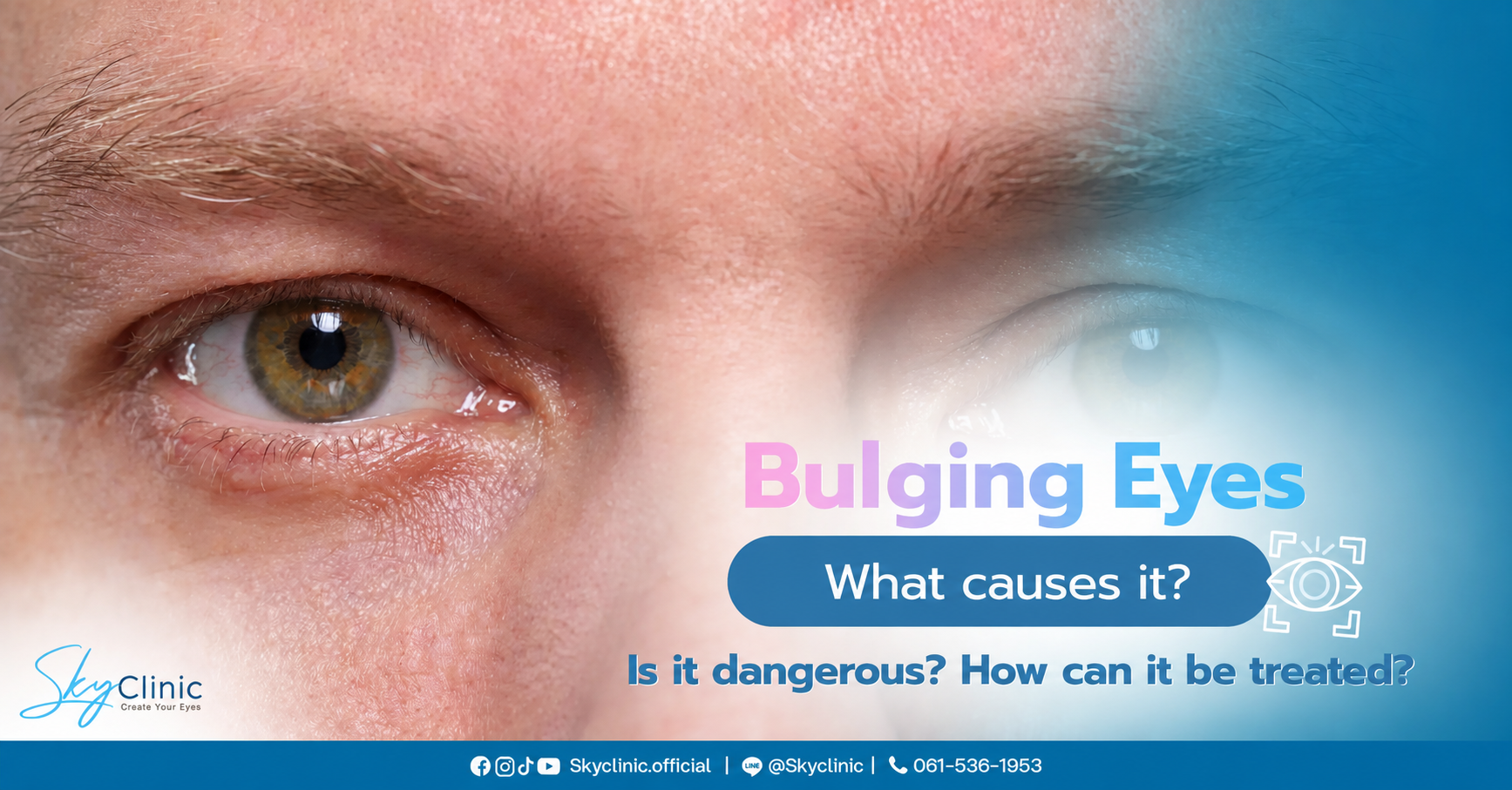
In normal eye anatomy, when looking straight ahead, the upper eyelid typically rests slightly over the upper border of the iris, with the white part of the eye (sclera) usually visible only near the inner and outer corners. In individuals with proptosis, however, increased visibility of the sclera above or below the iris may become apparent, creating a more prominent or staring appearance.
Abnormally wide eyelid opening
People with proptosis often have upper eyelid retraction, in which the upper eyelid is abnormally pulled upward. This makes the eyes appear constantly wide open, creating a startled or staring appearance. In addition, when looking downward, the upper eyelid may not move smoothly with the eyeball, making the eyes appear stiff and unnatural.
Eyeball protrudes forward from the eye socket
When viewed from the side, the eyeball may visibly protrude beyond the orbital rim. Comparing the current appearance with older photos may reveal that the eyes appear more prominent than before. This condition can affect one or both eyes.
What Causes Protosis?

Bulging eyes do not occur without a cause. This condition occurs when abnormal tissue or swelling occupies space within the eye socket, creating pressure that pushes the eyeball forward. Proptosis can result from several different causes, including:
Hyperthyroidism (Thyroid Eye Disease)
This is one of the most common causes of proptosis, especially when both eyes are involved, as in Graves’ disease. It occurs when the immune system attacks the tissues, fat, and muscles surrounding the eyes. This leads to inflammation and swelling, causing the tissues behind the eyes to enlarge and push the eyeballs forward. The condition is often associated with symptoms such as palpitations, hand tremors, and unexplained weight loss.
Infection or Inflammation within the Eye Socket
Bacterial or viral infections spreading from nearby areas, such as sinus infections, or inflammation of the tissues within the eye socket with no identifiable cause, such as orbital cellulitis or idiopathic orbital inflammation (IOI), can cause swelling inside the orbit and push the eyeball forward. These conditions often develop quickly and are commonly accompanied by severe eye pain, redness, and swollen eyelids.
Tumors or masses within the eye socket
A mass developing behind the eyeball, whether a benign tumor, cyst, or malignant tumor (cancer), can gradually occupy space within the eye socket. As the mass enlarges, it may push the eyeball forward, causing progressive eye protrusion. This condition often affects only one eye.
Accidents or trauma to the eye area
A severe impact to the face or eye socket can cause orbital bleeding or significant swelling of the surrounding tissues. Pressure from accumulated blood or fluid can push the eyeball forward, resulting in sudden eye bulging following the injury.
Blood vessel abnormalities around the eyes
Blood vessel abnormalities behind the eye, such as abnormal artery-vein connections, can increase blood flow and pressure within the eye socket. This may cause eye protrusion and can also be associated with eye redness or a pulsating sound in the head.
Genetics or orbital bone structure
In some cases, bulging eyes are not caused by disease but by inherited anatomical features, such as naturally shallow eye sockets. In individuals with severe myopia (for example, over -10.00 diopters), the eyeball may become elongated, making the eyes appear more protruded than average. This may be a normal anatomical characteristic and is generally not dangerous.
Which Types of Proptosis Require Urgent Medical Attention?
Although some cases of proptosis may develop gradually without severe symptoms at first, you should seek immediate medical attention if you notice that the eyes suddenly protrude over a few days or are accompanied by warning signs such as severe eye pain, sudden vision loss, double vision, blurred vision, significant eye redness, or high fever. These may be warning signs of a serious infection or increased pressure within the eye socket compressing the optic nerve, which may lead to permanent vision loss.
How to Treat Protosis
Treatment for proptosis does not rely on a single approach. Instead, an ophthalmologist will evaluate the underlying cause and determine the most appropriate treatment plan. Treatment options may include:
Treating the underlying cause of the condition
Since proptosis is considered a symptom rather than a disease itself, the most effective treatment is to address the underlying cause. For example, if the condition is caused by a tumor, surgery may be considered to remove the mass. If it is associated with an underlying systemic disease, the primary condition must first be properly controlled and treated.
Using artificial tears and anti-inflammatory medication
For individuals experiencing dry eyes caused by incomplete eyelid closure, doctors may recommend artificial tears in the form of eye drops or gels to increase moisture and help prevent corneal damage. In some cases, steroid medications may also be considered to reduce inflammation and swelling within the eye socket.
Controlling thyroid hormone levels
If the condition is caused by hyperthyroidism, doctors may prescribe medication to control thyroid hormone levels or consider radioactive iodine treatment to help suppress the immune system activity affecting the tissues around the eyes. Treatment usually requires long-term follow-up to monitor symptoms and treatment response.
Administering antibiotics for infection
If the condition is caused by an orbital infection, it is considered a medical emergency that requires intravenous antibiotics. Prompt treatment is necessary to prevent the infection from spreading to the brain and to reduce swelling within the orbit.
Orbital and eye muscle corrective surgery
In severe cases where swollen tissues compress the optic nerve, or when cosmetic concerns persist after the disease has stabilized, surgery may be considered. This can include orbital decompression surgery to create more space within the eye socket and allow the eyeball to return to a more natural position, or eye muscle surgery to correct double vision.
How to Take Care of Yourself When Experiencing Proptosis
When experiencing proptosis, proper daily eye care is important to help prevent complications such as corneal inflammation. The following self-care practices are recommended:
Use artificial tears or lubricating eye gel before bedtime to help prevent dry eyes and corneal irritation caused by incomplete eyelid closure during sleep
Wear sunglasses or protective eyewear when going outdoors to protect the eyes from sunlight, wind, and dust
Sleep with your head elevated on a higher pillow to help reduce swelling around the eyes
Avoid rubbing the eyes, as this may further irritate the cornea
Avoid smoking completely, as chemicals in cigarettes can stimulate the immune system and worsen thyroid eye disease, making the condition more severe and harder to treat
Self-Care Tips for Proptosis from Sky Clinic
The eyes are highly complex organs, and even small changes can affect both vision and self-confidence. If you are concerned about changes in your eye appearance or have eyelid problems related to your eye structure, consulting an eye surgery clinic with experienced ophthalmologists, such as Sky Clinic, is a safe and reliable option. At Sky Clinic, we focus on identifying the root cause of each problem through detailed evaluation of the orbital structure and surrounding muscles. This allows us to create personalized treatment plans that enhance natural-looking results, prioritize safety, and help restore confidence and facial harmony.
Frequently Asked Questions About Proptosis
To help you better understand this condition, here are some of the most common questions and concerns among people with proptosis:
Can Proptosis Be Treated Successfully?
Proptosis can often improve significantly if the underlying cause is accurately diagnosed and treated early, especially in cases related to inflammation or hormonal imbalance. Once the condition is properly controlled, the swelling around the eyes may gradually improve. However, if the condition is left untreated for too long and scar tissue develops, surgical treatment may be necessary to help correct the condition.
When Should You See a Doctor for Proptosis?
If you notice rapid eye protrusion or experience symptoms such as eye socket pain, double vision, blurred vision, or severe eye redness and inflammation, you should see an ophthalmologist immediately. Do not ignore these signs, as delaying treatment may lead to permanent vision damage.
Can Proptosis Cause Blindness?
It is possible in some cases, especially when proptosis is caused by swollen tissues or a growing tumor that compresses the optic nerve. This can reduce blood flow to the nerve and impair vision. If the pressure is not relieved in time, it may lead to permanent vision loss or blindness.
Summary
Bulging eyes are a visible symptom that may indicate underlying health conditions, ranging from systemic conditions such as hyperthyroidism to infections or tumors within the eye socket. Monitoring changes in the eyes and accompanying symptoms can help ensure early diagnosis and treatment. Once the cause of proptosis is identified, promptly consulting an ophthalmologist for proper evaluation and treatment is the best way to protect vision and long-term eye health, helping preserve clear vision and overall ocular health.
Source : -