


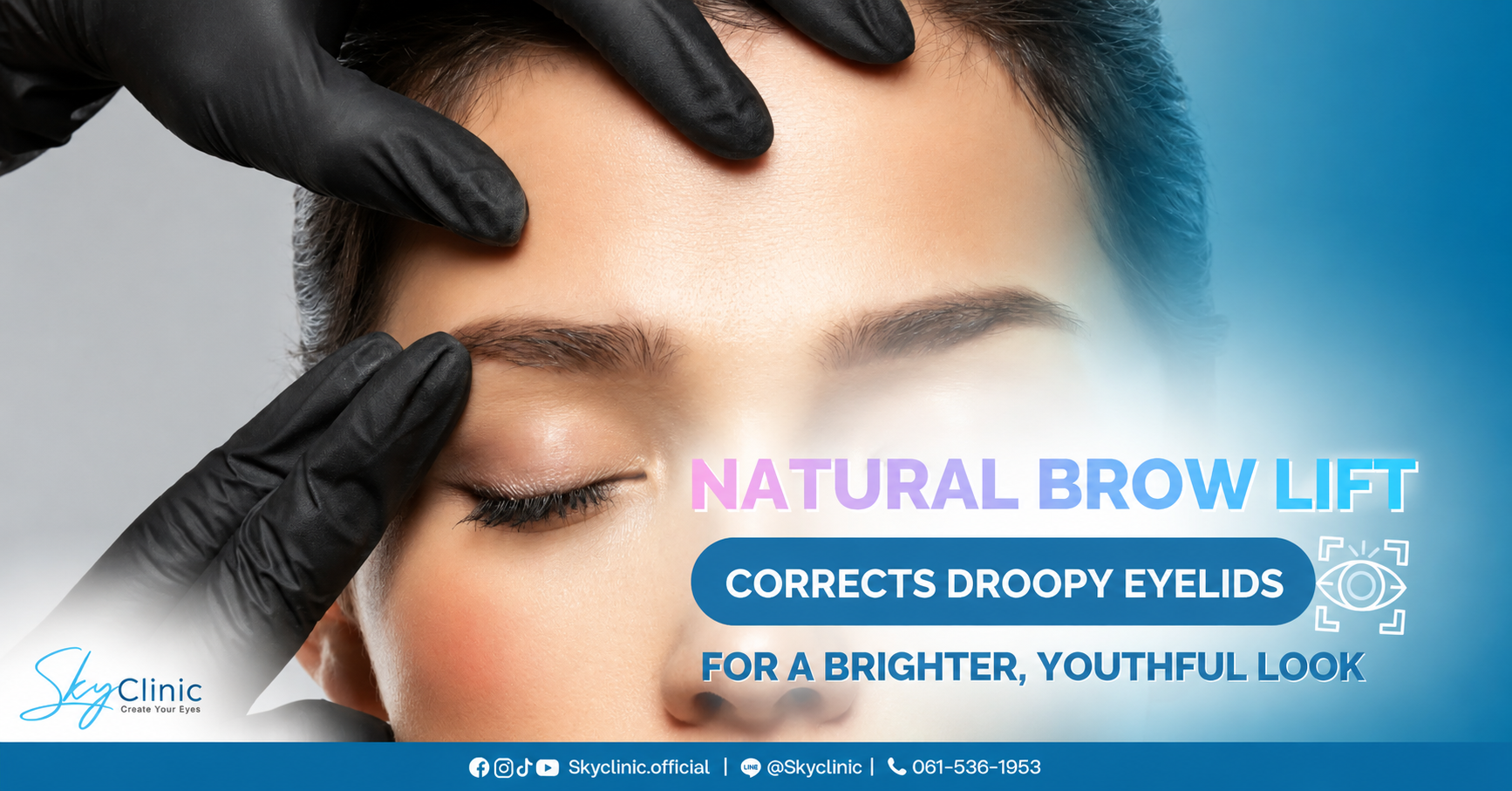
Temple Lift Surgery For Lifted Eyes and a More Youthful Look




As we age, facial sagging becomes increasingly difficult to avoid, especially around the eyes, where signs of aging often appear first. Common concerns include drooping outer eye corners, sagging eyebrows, and wrinkles around the eyes that can make the face appear tired and less refreshed. As a result, many people seek solutions to restore a more youthful appearance. Temple lift surgery has become one of the most popular options today. This article will explore every aspect of the procedure in depth to help you better understand it and make a confident decision.
What Is Temple Lift Surgery?
Temple lift surgery is a minimally invasive procedure designed to tighten sagging skin and muscles around the outer corners of the eyes and temple area. It helps correct upper facial concerns that can make the face appear tired, sad, or older than its actual age, restoring a brighter and more youthful appearance. The incision is carefully hidden within the hairline by a specialized ophthalmologist, making post-surgical scars barely visible. Nowadays, the Endobrow Lift technique is commonly used to enhance lifting and tightening, providing more natural-looking and longer-lasting results.
What Concerns Can a Temple Lift Help Address?
A temple lift does more than just create a sharper and more defined facial contour. It can also effectively address various types of sagging around the eye area in a comprehensive way. The following are some of the main concerns that specialized ophthalmologists commonly recommend this procedure.
Droopy Outer Eye Corners
Droopy outer eye corners are often caused by the natural deterioration of the skin structure and surrounding tissues over time. This can make the eyes appear tired, dull, and older than their actual age. Temple lift surgery helps lift the outer corners of the eyes, restoring a brighter and more refreshed appearance. Choosing a qualified and reputable eye surgery clinic can help rejuvenate the eye area, ensuring safe, natural-looking, and youthful results.
Sagging Eyebrows
Sagging eyebrows or brows positioned lower than normal can make the face appear stern or constantly tired. Temple lift surgery using the Endobrow Lift technique, or an endoscopic brow lift with Endotine fixation devices, can help elevate the outer brows to a more suitable position, creating better balance between the eyebrows and the eyes.
Crow’s Feet Wrinkles
Crow’s feet around the outer corners of the eyes are one of the most visible signs of aging. Although wrinkle-reducing injections can help to some extent, for those with significant skin laxity, a temple lift can tighten and lift the skin in this area more effectively. As a result, deep crow’s feet appear noticeably reduced, and the skin around the outer eyes becomes smoother again. It is considered an effective treatment option for deep wrinkles that provides longer-lasting results compared to temporary treatments.
Sagging Eyelid Skin
When the skin on the upper eyelids begins to sag and droop over the eyes, it can not only affect confidence but may also obstruct vision. A temple lift helps tighten and lift the excess skin around the outer upper eyelid area, reducing eyelid heaviness and making the eyelid crease appear more defined again. This can be achieved without removing excessive eyelid skin, allowing the eyes to look naturally more open and brighter.
Enhancing Facial Dimensions for a Sharper and More Defined Look
For those who want to enhance their appearance with more attractive and sharper-looking eyes, a temple lift can effectively achieve this goal. The surgeon carefully lifts and tightens the outer corners of the eyes and brows at an appropriate angle, creating what is commonly known as the Foxy Eyes look. This procedure helps create new facial dimensions, making the face appear more attractive, captivating, and more confident from every angle.
Who Is Suitable For Temple Lift Surgery?

To determine whether someone is a suitable candidate for temple lift surgery, a specialized ophthalmologist will primarily assess the facial structure and specific concerns. The people who are most suitable and likely to benefit from this procedure generally have the following characteristics and concerns:
Droopy outer eye corners or sagging eyebrows that make the face appear tired, sad, or older than its actual age
Deep crow’s feet and wrinkles around the outer corners of the eyes
Sagging eyelid skin that droops over the outer eyelid crease
A desire to create a sharper eye shape or achieve a Foxy Eyes appearance
Residual sagging around the outer corners of the eyes after previous double eyelid surgery
Droopy outer eye corners or sagging eyebrows that make the face appear tired, sad, or older than its actual age
Deep crow’s feet and wrinkles around the outer corners of the eyes
Sagging eyelid skin that droops over the outer eyelid crease
A desire to create a sharper eye shape or achieve a Foxy Eyes appearance
Residual sagging around the outer corners of the eyes after previous double eyelid surgery
Benefits of Temple Lift Surgery
Choosing upper facial rejuvenation through temple lift surgery is considered a worthwhile aesthetic investment, especially when combined with the Endobrow Lift technique. The main benefits of this procedure include the following:
Clear and long-lasting results: Effectively lifts and tightens the outer corners of the eyes and eyebrows, with results that can last for many years.
Small incisions with well-hidden scars: The incisions are hidden along the hairline, making them difficult to notice.
Fast recovery: When using the Endobrow Lift technique, swelling and bruising can be minimized, allowing patients to return to daily routines more easily.
Enhances the overall facial contour: Helps the face appear brighter, more youthful, and naturally more defined.
Clear and long-lasting results: Effectively lifts and tightens the outer corners of the eyes and eyebrows, with results that can last for many years.
Small incisions with well-hidden scars: The incisions are hidden along the hairline, making them difficult to notice.
Fast recovery: When using the Endobrow Lift technique, swelling and bruising can be minimized, allowing patients to return to daily routines more easily.
Enhances the overall facial contour: Helps the face appear brighter, more youthful, and naturally more defined.
Precautions for Temple Lift Surgery
Although temple lift surgery is considered safe and can provide effective results, it is still a surgical procedure that should only be performed by a specialized ophthalmologist to minimize potential risks. The following precautions should be understood before making a decision:
There are risks associated with general anesthesia or local anesthesia, so a proper health evaluation should be completed before surgery.
Swelling and bruising after surgery are normal; however, if you experience unusual pain or excessive swelling, you should consult your doctor immediately.
The results may appear asymmetrical during the early stages of recovery, as the swelling needs time to fully subside before the tissues settle into place.
A qualified clinic with modern equipment should be carefully selected to help reduce the risk of infection.
There are risks associated with general anesthesia or local anesthesia, so a proper health evaluation should be completed before surgery.
Swelling and bruising after surgery are normal; however, if you experience unusual pain or excessive swelling, you should consult your doctor immediately.
The results may appear asymmetrical during the early stages of recovery, as the swelling needs time to fully subside before the tissues settle into place.
A qualified clinic with modern equipment should be carefully selected to help reduce the risk of infection.
Preparation for Temple Lift Surgery and Self-Care Guidelines
To ensure that temple lift surgery proceeds smoothly and achieves the most satisfying results, proper physical preparation and appropriate post-operative self-care are extremely important. Patients should strictly follow the recommendations of their specialized ophthalmologist.
Pre-Operation Preparation
Avoid taking blood-thinning medications, as well as certain vitamins and dietary supplements, for at least 2 weeks before surgery.
Avoid smoking and consuming alcoholic beverages for at least 2 weeks before surgery to help prevent delayed wound healing.
Wash your hair thoroughly the day before surgery and avoid using any hair styling products or chemical treatments.
Avoid taking blood-thinning medications, as well as certain vitamins and dietary supplements, for at least 2 weeks before surgery.
Avoid smoking and consuming alcoholic beverages for at least 2 weeks before surgery to help prevent delayed wound healing.
Wash your hair thoroughly the day before surgery and avoid using any hair styling products or chemical treatments.
Post-Operative Care and Recovery Period
Apply cold compresses around the eyes and forehead during the first 72 hours after surgery to help reduce swelling and bruising.
Sleep with your head elevated for the first 1-2 weeks to help minimize blood accumulation around the surgical area.
Clean the incision regularly according to your doctor’s instructions and avoid getting the incision area wet during the initial recovery period.
Avoid strenuous exercises or activities that require bending your head downward for at least 2 weeks after surgery.
Apply cold compresses around the eyes and forehead during the first 72 hours after surgery to help reduce swelling and bruising.
Sleep with your head elevated for the first 1-2 weeks to help minimize blood accumulation around the surgical area.
Clean the incision regularly according to your doctor’s instructions and avoid getting the incision area wet during the initial recovery period.
Avoid strenuous exercises or activities that require bending your head downward for at least 2 weeks after surgery.
Self-Care Guidelines After Temple Lift Surgery At Sky Clinic
At Sky Clinic, specialized ophthalmologists place great importance on close post-operative care following temple lift surgery. Patients receive personalized instructions to ensure a safe and smooth recovery process. In addition to taking prescribed medications, attending scheduled follow-up appointments and suture removal visits is essential. When the Endobrow Lift technique is performed in combination, the incisions are smaller and easier to care for. However, patients should still avoid any impact or pressure on the surgical area to help ensure the best possible aesthetic outcome.
Frequently Asked Questions About Temple Lift Surgery
Before deciding to undergo temple lift surgery, many people may still have questions and concerns. Therefore, we have compiled some frequently asked questions about upper facial lifting procedures to help clarify doubts and build confidence before consulting with a doctor.
Does temple lift surgery hurt, and will the scars be visible?
Temple lift surgery is typically performed with local anesthesia combined with sedation, or in some cases general anesthesia, so patients usually feel little to no pain during the procedure. After surgery, mild tightness, soreness, or swelling may occur, but these symptoms can generally be managed with prescribed pain medication. The surgeon carefully places the incision along the hairline, making it well concealed. Once the incision area has fully healed, the scar is usually barely noticeable.
How long does the temple lift last, and is it permanent?
The results of a temple lift are not permanent, as the skin continues to age and gradually loses elasticity over time. However, the results generally last for approximately 5–10 years. When combined with the Endobrow Lift technique for additional tissue fixation support, along with proper post-operative care and healthy lifestyle habits, the results may last even longer.
Are there other ways to lift the outer corners of the eyes if I do not want surgery?
If the sagging is mild or you are not ready for surgery, alternative treatments may be considered, such as wrinkle-relaxing injections to reduce muscle activity or energy-based lifting devices to help tighten the skin. However, the results of these treatments are temporary. For more noticeable and longer-lasting results, a specialized ophthalmologist may recommend the Endobrow Lift technique, a surgical lifting procedure that provides more effective and natural-looking outcomes with longer-lasting results.
Summary

Temple lift surgery is an excellent solution for individuals who want to correct drooping outer eye corners, sagging eyebrows, and wrinkles around the eyes. It helps restore a more youthful appearance while enhancing facial contours, making the face look brighter and more defined. In particular, combining this procedure with the Endobrow Lift technique can help conceal scars more effectively and provide longer-lasting results. Those who are interested may consult with the specialized ophthalmologists at Sky Clinic, who have expertise in Double Eyelid Surgery, Medial Epicanthoplasty (Inner Corner Opening), Ptosis Correction (Weak Eyelid Muscle Correction), Subbrow Lift Surgery, Endoscopic Brow Lift, and Under-eye Fat Removal. Treatment plans are tailored to each individual’s facial structure and specific concerns.
Source : -