


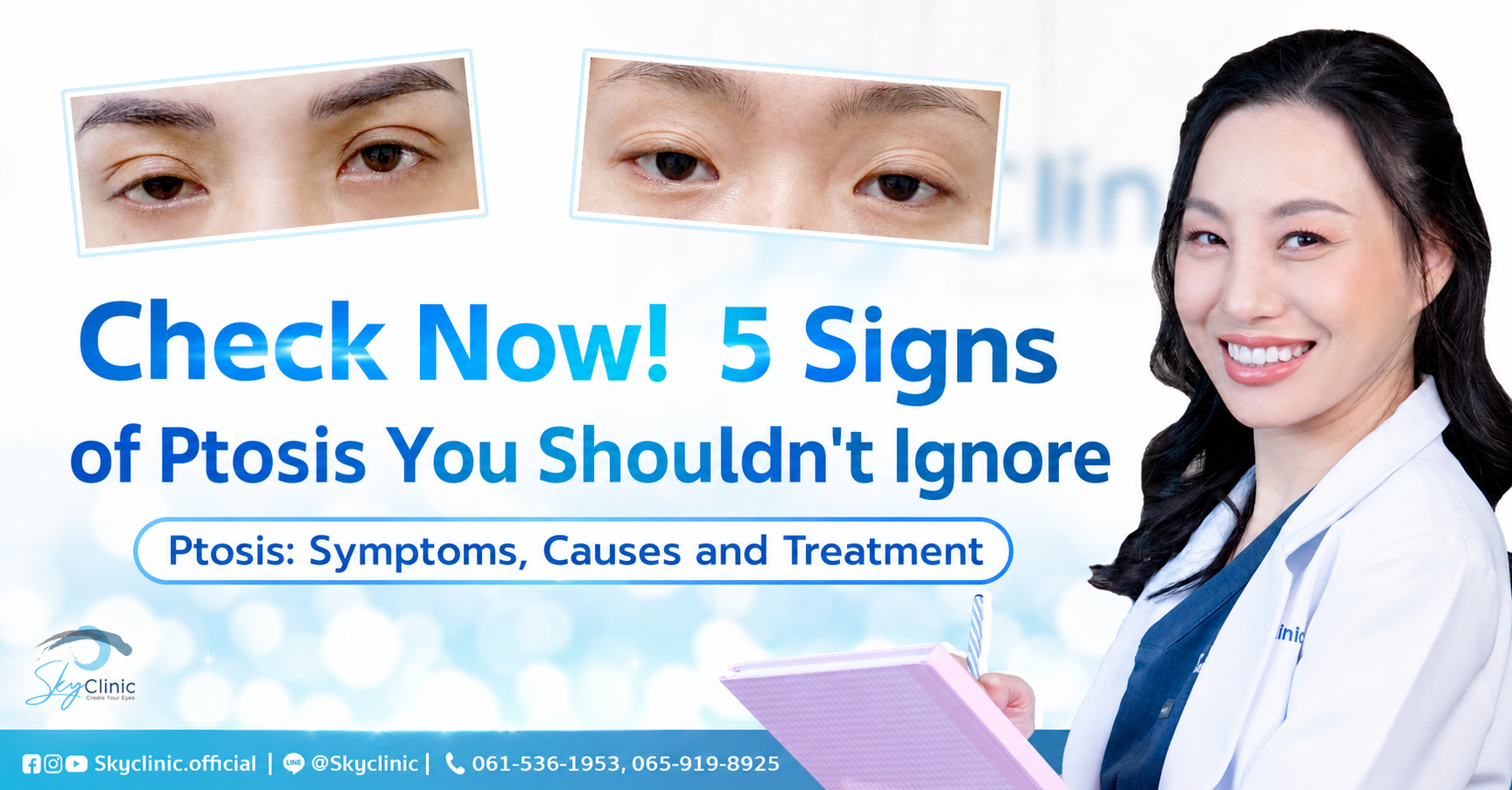
5 Warning Signs of Ptosis: Causes, Symptoms, and Treatment Options




What causes ptosis? Ptosis is a condition in which the upper eyelid droops lower than normal due to weakness or dysfunction of the muscles responsible for lifting the eyelid. This can partially obstruct the visual field and may interfere with daily activities. Ptosis can develop for a variety of reasons, and recognising the symptoms early is important for timely diagnosis and treatment. If you suspect that you may have ptosis, Sky Clinic shares the key signs and symptoms you should know in this article.
What Is Ptosis?
Ptosis is a condition in which the muscles responsible for lifting the upper eyelid do not function properly. It commonly occurs when the levator muscle or its tendon is stretched or weakened, rendering it unable to support the upper eyelid adequately. Normal eyelid opening and blinking require proper coordination between the eyelid muscles, nerves, and surrounding structures. Ptosis develops when this lifting mechanism does not function effectively.

5 Signs of Ptosis
To help you identify and manage ptosis, let’s take a look at five key signs of this condition.
1. Drooping Eyelids, Sleepy Eyes, and Tired-Looking Eyes
Ptosis can cause constantly drooping eyelids, difficulty fully opening the eyes, and a feeling of heaviness or fatigue around the eyelids, which may affect overall facial appearance and expression.

2. Difficulty Fully Opening Eyes with Less of the Iris Visible
Because of the drooping upper eyelid, the visual field may become partially obstructed. Even when trying to open their eyes, patients may have difficulty opening them fully.

3. Frequent Eyebrow Raising, Uneven Eyebrows, and Forehead Wrinkles
This occurs when the muscles responsible for lifting the upper eyelid do not have enough strength to elevate the eyelid properly, making it difficult to fully open the eyes. As a result, patients may unconsciously recruit the forehead and eyebrow muscles to help lift the eyelids. Overactivation of these muscles causes the eyebrows to be positioned higher than normal. Over time, this compensatory muscle activity may also contribute to the development of forehead wrinkles.

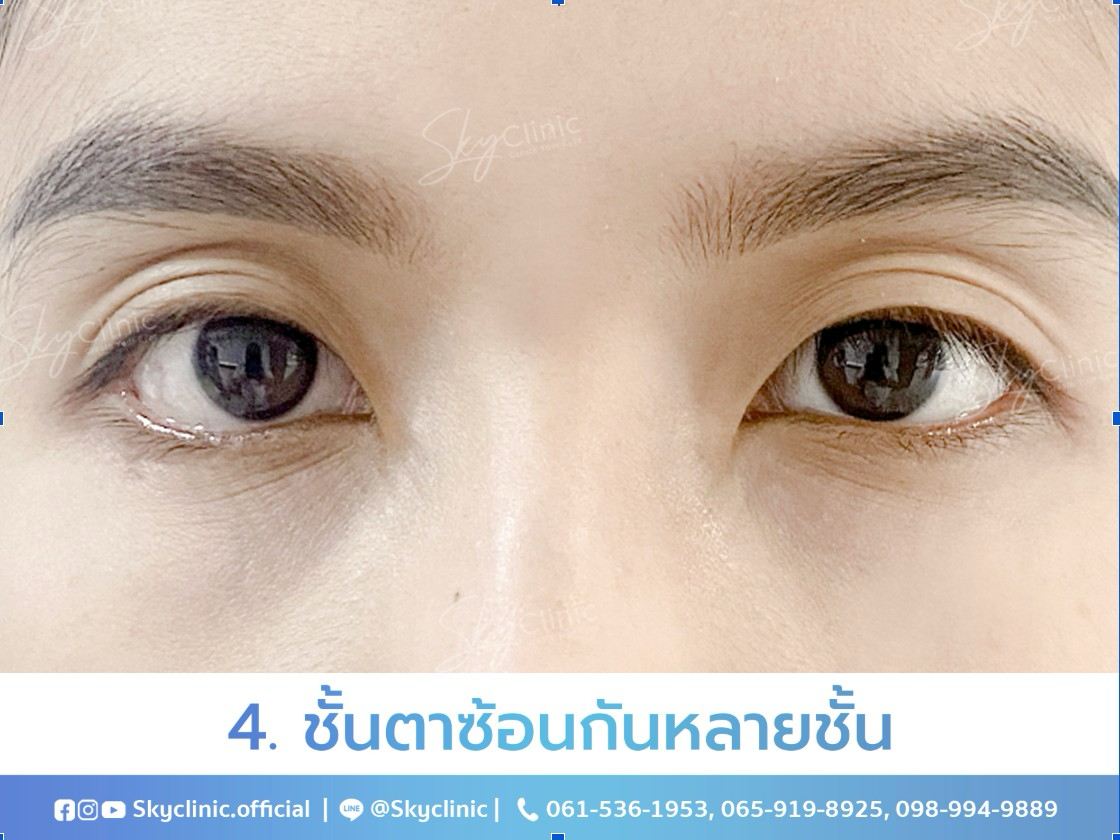
4. Multiple Eyelid Creases or Overlapping Folds
This occurs when the muscles responsible for lifting the upper eyelid do not function properly, causing the eyelid skin to fold and form multiple eyelid creases.
 5. Hollow Under-Eyes and Deep Eye Sockets
It is caused by the eyelid muscles not contracting at full strength, resulting in more space between the eyelid and the brow bone than normal, making the eyes appear sunken. In some cases, age-related fat loss combined with droopy eyelids also contributes to a hollow, deep-set eye appearance.

What Can Cause Ptosis?
Ptosis (drooping of the upper eyelid) can be caused by a variety of factors, including genetics, age-related changes in the eyelid muscles, and certain lifestyle or environmental factors. The underlying cause may vary from person to person, as follows:
Congenital Ptosis
Congenital ptosis is present at birth and may occur due to inherited factors, as the condition can run in families. It is characterised by weakness or underdevelopment of the muscles responsible for lifting the upper eyelid. If left untreated, it may obstruct the visual field and, in children, may affect normal visual development.
Age-Related Ptosis
As age increases, the skin around the eyelids becomes looser, and the eyelid muscles lose elasticity, making eyelid drooping more likely than in younger individuals.
Caused by Daily Lifestyle Habits
For example, working in front of a computer or using a smartphone for long periods without resting the eyes, rubbing the eyes forcefully, or wearing contact lenses every day for a long time can also contribute to ptosis.
Caused by Unsuccessful Double Eyelid Surgery
Improper or non-standard double eyelid surgery may affect the muscles responsible for lifting the upper eyelid, potentially leading to eyelid drooping (ptosis).
Caused by Abnormalities of the Immune System
Myasthenia Gravis (MG) is an autoimmune disorder in which the immune system interferes with communication between the nerves and muscles, resulting in muscle weakness. The muscles responsible for lifting the upper eyelid are commonly affected, leading to drooping eyelids (ptosis).
Is Ptosis Dangerous, and What Effects Does It Have?
Although ptosis is not life-threatening, it can significantly affect daily activities and facial appearance. If left untreated, drooping eyelids may partially obstruct the visual field and interfere with daily tasks. People with this condition often compensate by raising their eyebrows or tilting their head backward to improve their field of vision. Persistent overuse of the forehead muscles may contribute to forehead muscle fatigue, headaches, and the development of forehead wrinkles. In addition, ptosis can make the eyes appear tired or less alert, which may affect facial appearance and reduce self-confidence in some individuals.
How Is Ptosis Treated?
Treatment for ptosis should be performed by a specialist ophthalmologist, as the procedure is more complex than standard double eyelid surgery. The procedure involves working on the muscles and supporting structures responsible for lifting the upper eyelid, tightening or reattaching them as needed to improve eyelid elevation. This helps improve eyelid opening, correct droopy, tired-looking eyes, and may also improve the appearance of hollow or deep-set eyes associated with ptosis. In many cases, ptosis correction is performed in combination with double eyelid surgery, resulting in larger, more open, and more natural-looking eyes.


Frequently Asked Questions About Ptosis
Does Ptosis Affect Daily Life?
Ptosis can affect the visual field and daily activities, especially when the drooping upper eyelid partially obstructs the field of vision or causes eye fatigue. This may lead to frequent eyebrow elevation or a compensatory head tilt to improve the visual field, which can be uncomfortable and may reduce overall quality of life.
Can Ptosis Go Away on Its Own?
Most cases of ptosis do not resolve on their own. This condition usually requires evaluation by a specialist to determine the underlying cause and the most appropriate treatment. Depending on the severity and cause of the condition, treatment may include medical management or ptosis correction surgery.
Can Ptosis Be Corrected with Double Eyelid Surgery Alone?
Double eyelid surgery alone cannot correct ptosis because treatment must also address the function of the muscles responsible for lifting the upper eyelid. While double eyelid surgery can improve the appearance of the eyelids, it does not correct the underlying cause of ptosis.
Can Ptosis Recur After Treatment?
Ptosis correction surgery can help improve eyelid position and eyelid elevation. However, in some cases, particularly those associated with congenital factors, progressive age-related changes, or underlying neuromuscular conditions such as Myasthenia Gravis, the condition may recur over time. The long-term outcome depends on the underlying cause, individual healing, and adherence to the surgeon’s postoperative recommendations.
Summary
If you have symptoms suggestive of ptosis, it is recommended to consult a specialist ophthalmologist for a comprehensive evaluation. If ptosis is confirmed, the doctor can recommend the most appropriate treatment, including ptosis correction surgery when indicated. A thorough assessment helps ensure that treatment is tailored to your individual condition and addresses the underlying cause effectively.
Source : Dr.Sky Burapadecha