



What Is Natural-Looking Double Eyelid Surgery, and How to Prepare Before Getting Beautiful Eyelids?




Natural-looking double eyelid surgery is one of the most popular cosmetic procedures in Thailand and continues to be in high demand. With advances in surgical techniques and modern technology, double eyelid surgery can be performed safely when carried out by a qualified and experienced surgeon. However, deciding to undergo any surgical procedure requires thorough research and careful preparation to help achieve optimal outcomes and minimise potential risks. In this article, we will explore natural-looking double eyelid surgery, from the basics and preoperative preparation to postoperative care, so you can make a well-informed decision.
What Is Natural-Looking Double Eyelid Surgery?
Natural-looking double eyelid surgery is a cosmetic procedure designed to improve the appearance of the upper eyelids and address a variety of aesthetic concerns. It may be suitable for individuals with monolids, small-looking eyes, mild drooping of the outer corners of the eyes, or hidden double eyelid folds. The procedure creates a natural-looking eyelid crease, helping the eyes appear larger, brighter, and more defined. It may also contribute to a more youthful facial appearance and improved self-confidence. With advances in surgical techniques and modern technology, natural-looking double eyelid surgery can be performed safely when carried out by a qualified and experienced surgeon.
What Causes Unnatural-Looking Double Eyelids After Surgery?
Double eyelid surgery is a popular cosmetic procedure that can enhance the appearance of the eyes and improve facial harmony. However, in some cases, the results may appear unnatural, overly prominent, or disproportionate to the facial features. One example is a condition commonly referred to as "clam-shell eyelids." This can be a concern for many patients. Unnatural-looking double eyelids may result from a variety of factors, including the patient's original eyelid anatomy and the surgical technique used, as described below.
Choosing an eyelid crease height that does not suit your eye shape
Creating an eyelid crease that is too high is a common cause of unnatural-looking surgical results. In individuals with facial features commonly seen in Asian populations, where the distance between the eyebrows and the upper eyelid is often relatively short, creating an excessively high or wide eyelid crease may result in a puffy appearance or an unnatural-looking eyelid. In some cases, it may contribute to a condition commonly referred to as "clam-shell eyelids." A well-designed eyelid crease should be carefully planned to complement the patient's eyelid anatomy, orbital structure, and overall facial proportions, ensuring a natural-looking result without an excessively deep or high eyelid crease.
Using a surgical technique that is not suitable for the eyelid condition
Choosing an inappropriate surgical technique can also lead to unsatisfactory results. For example, individuals with thick upper eyelids, excess eyelid fat, and redundant eyelid skin who undergo a suture-only technique without appropriate removal of excess tissue may develop puffy, poorly defined eyelid creases that can become less distinct or loosen over time. Conversely, using a full-incision technique in patients without an appropriate indication may result in more noticeable scarring. Therefore, the surgeon should carefully select the most appropriate surgical technique based on each patient's eyelid anatomy, tissue characteristics, and aesthetic goals.
Excessive removal of eyelid fat
Many people mistakenly believe that removing as much eyelid fat as possible will prevent the eyes from appearing puffy. In reality, excessive removal of eyelid fat and soft tissue can result in a hollow or sunken appearance of the upper eyelids, making the eyes appear tired and the face look older. In addition, insufficient soft tissue support may cause the eyelid crease to appear deep, tight, or unnatural and, in some cases, contribute to the formation of multiple eyelid creases.
Ptosis or weak eyelid muscles
An abnormally large or high eyelid crease may be seen in individuals with underlying ptosis that was not identified or adequately corrected before undergoing double eyelid surgery. When the muscles responsible for lifting the upper eyelid do not function properly, the upper eyelid sits lower than normal, making the eyelid crease appear more prominent or thicker than intended. As a result, the eyes may appear droopy, tired, and less natural. In such cases, ptosis correction combined with double eyelid surgery is often necessary to achieve a more balanced and natural-looking result.
Post-operative scarring or fibrosis
After surgery, the body naturally forms scar tissue as part of the healing process. However, excessive scar formation (fibrosis), inappropriate tissue adhesion, or excessive tension during wound closure may result in abnormal adhesion beneath the eyelid skin. These adhesions can distort the eyelid crease, causing it to appear uneven, irregular, or excessively deep. As a result, the eyelids may appear stiff during opening and closing, producing an unnatural appearance that may be noticeable after surgery.
Naturally deep-set eyes
In individuals with naturally deep-set eyes or limited upper eyelid volume, creating a double eyelid crease without considering volume preservation or appropriate fat repositioning may result in a less natural appearance. The eyelid crease may appear overly high, excessively deep, or contribute to upper eyelid hollowing. As a result, the eyes may appear tired or sunken, making the overall facial appearance look older or more fatigued.
Triple eyelids after surgery
Triple eyelids may occur as a result of several surgical factors, including inaccurate design of the eyelid crease, incomplete removal of redundant eyelid skin, creation of a new eyelid crease that overlaps with the natural crease, or excessive removal of upper eyelid fat and soft tissue. These factors can result in multiple visible eyelid creases, creating an uneven and irregular appearance. In addition to appearing less natural, triple eyelids may also cause the eyes to appear asymmetrical and less aesthetically balanced.
Who Is a Good Candidate for Double Eyelid Surgery?
The decision to undergo double eyelid surgery is not limited to individuals who wish to enhance their appearance. It may also benefit those with eyelid concerns that affect their appearance or daily activities. People who may be suitable candidates for double eyelid surgery include:
Individuals with monolids who would like a natural-looking double eyelid crease.
Individuals with uneven eyelid creases who wish to achieve better symmetry.
Individuals with hidden or low eyelid creases that make the eyes appear less defined.
Individuals with droopy upper eyelids, thick eyelid skin, or redundant eyelid skin.
Individuals with excess upper eyelid fat, resulting in puffy or heavy-looking eyelids.
Individuals with ptosis (drooping of the upper eyelid), which may cause the eyes to appear droopy or tired.
Individuals who wish to enhance the appearance of their eyes and create a more open-eyed look.
Individuals who would like to make eye makeup application easier, particularly eye-focused makeup.
Individuals who wish to enhance their confidence with natural-looking results.
What Techniques Are Used in Natural-Looking Double Eyelid Surgery
Today, a variety of double eyelid surgery techniques are available, allowing surgeons to tailor the procedure to each patient's eyelid anatomy and aesthetic goals. During the consultation, the surgeon will evaluate the patient's eyelid anatomy and recommend the most appropriate surgical technique based on their individual needs. Common techniques include the following:
Mini-Incision Double Eyelid Surgery
The Mini-Blepharoplasty is a double eyelid surgery method that uses a small incision, typically ranging from 0.5 to 1.5 cm, depending on the patient's eyelid anatomy. Through the small incision, the surgeon creates a natural-looking eyelid crease using an appropriate fixation technique. In some cases, excess upper eyelid fat may also be repositioned or conservatively removed when indicated. Because the incision is concealed within the natural eyelid crease, the resulting scar is usually minimal and less noticeable. This technique is suitable for individuals with monolids, hidden double eyelid creases, or mild asymmetry who wish to achieve a softer and more natural-looking eyelid crease.
Full-Incision Double Eyelid Surgery with Excess Skin Removal
This Upper Lid Blepharoplasty technique involves a full-length incision with excess skin removal; in some cases, fat removal or reshaping may also be performed to achieve the best possible result for each individual. The incision is made along the eyelid from the inner corner to the outer corner, following the patient's natural eye shape. Excess skin and fat are then removed to create a well-defined and natural-looking eyelid crease. This technique is particularly suitable for individuals with droopy eyelids or excess eyelid skin. The scar is concealed within the natural eyelid crease, making it less noticeable once healed.
Subbrow Lift
A Subbrow Lift technique can be performed in combination with full-incision double eyelid surgery or other upper eyelid procedures. It is particularly suitable for individuals who already have a well-defined eyelid crease but have developed droopy upper eyelids, lateral hooding, or redundant upper eyelid skin due to ageing. This procedure helps preserve the patient's existing natural eyelid crease while lifting and tightening the upper eyelid and outer eyelid area, resulting in a more refreshed and youthful appearance without significantly altering the natural shape of the eyes.
Medial Epicanthoplasty
Epicanthoplasty (medial epicanthoplasty) can be performed in combination with other double eyelid surgery techniques. The procedure helps reduce the prominence of the epicanthal fold, creating the appearance of a longer and more open eye shape. As a result, the eyes may appear brighter, more defined, and more refreshed while maintaining a natural-looking appearance.
Ptosis Correction
Ptosis (weakness of the muscles responsible for lifting the upper eyelid) can often be recognised by signs such as drooping upper eyelids, a tired-looking appearance, or upper eyelids that cover more of the iris than normal, which may partially obstruct the visual field. Ptosis correction surgery improves the function and position of the muscles responsible for lifting the upper eyelid, allowing the eyes to open more fully. As a result, the eyes may appear brighter and more refreshed while improving the visual field and reducing obstruction caused by drooping upper eyelids.
Under-Eye Bag Fat Removal
In addition to concerns involving the upper eyelids, prominent under-eye bags can make the face appear tired and older. Lower Lid Blepharoplasty is a procedure that addresses excess fat beneath the eyes through either a transconjunctival or transcutaneous approach, depending on the patient's condition. In selected cases, the fat may be repositioned rather than removed to create a smoother and more balanced under-eye contour. This procedure helps reduce under-eye puffiness, improve the appearance of tear trough deformities, and create a more refreshed, youthful appearance. It can also complement double eyelid surgery, resulting in a more harmonious overall facial appearance.
Post-Operative Instructions for Double Eyelid Surgery
To promote optimal healing, minimise swelling and bruising, and help the eyelid crease settle naturally, it is important to follow all postoperative care instructions carefully. These include the following:
1. During the First 3 Days After Double Eyelid Surgery
During the first 3 days after double eyelid surgery, wrap an ice pack or cold compress in a clean cloth before applying it around the surgical area. Avoid allowing moisture or water to come into contact with the incision. Cold compresses may be applied intermittently during the first 48–72 hours to help minimise swelling and bruising. In addition, sleeping with your head elevated can help reduce swelling. If slight bleeding or oozing occurs, gently blot the area with a clean gauze pad without rubbing the incision.
2. From Day 4 Onwards, After Double Eyelid Surgery
From approximately Day 4 after double eyelid surgery, warm compresses may be applied to help reduce swelling and bruising. The incision should be cleaned twice daily with sterile saline solution and then gently patted dry. It is also important to keep the incision clean and dry to help reduce the risk of infection. In addition, patients should take all prescribed medications as directed by their surgeon, avoid rubbing the eyes or touching the surgical area, and limit activities that require prolonged visual concentration, such as reading, watching television, or using a computer for extended periods. When going outdoors, wearing sunglasses is recommended to protect the eyes. Contact lenses should be avoided for at least two weeks after surgery. Following all post-operative care instructions carefully will help promote optimal healing and recovery.
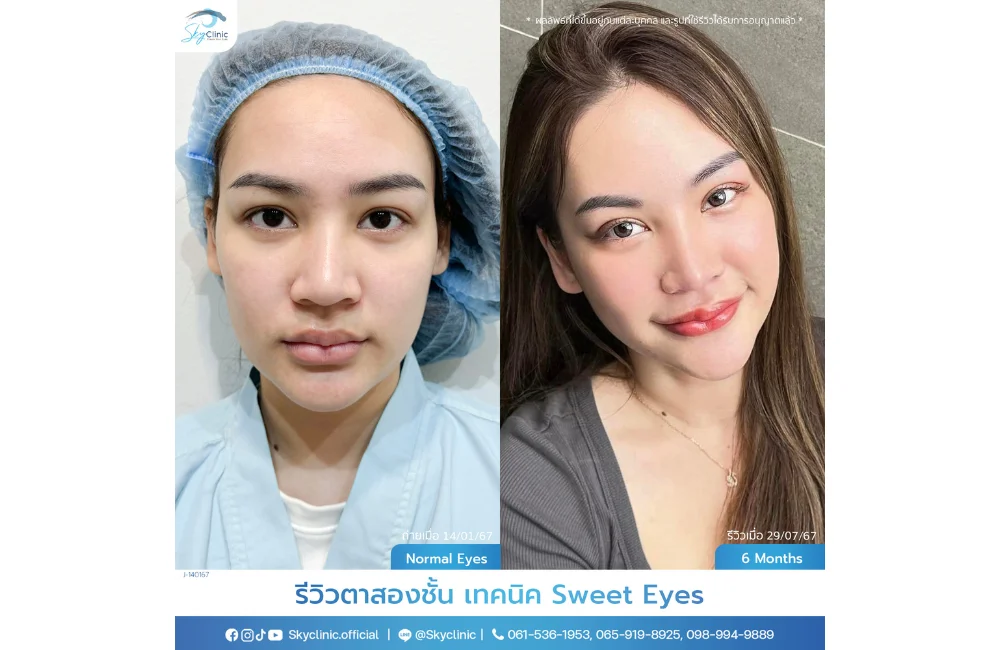
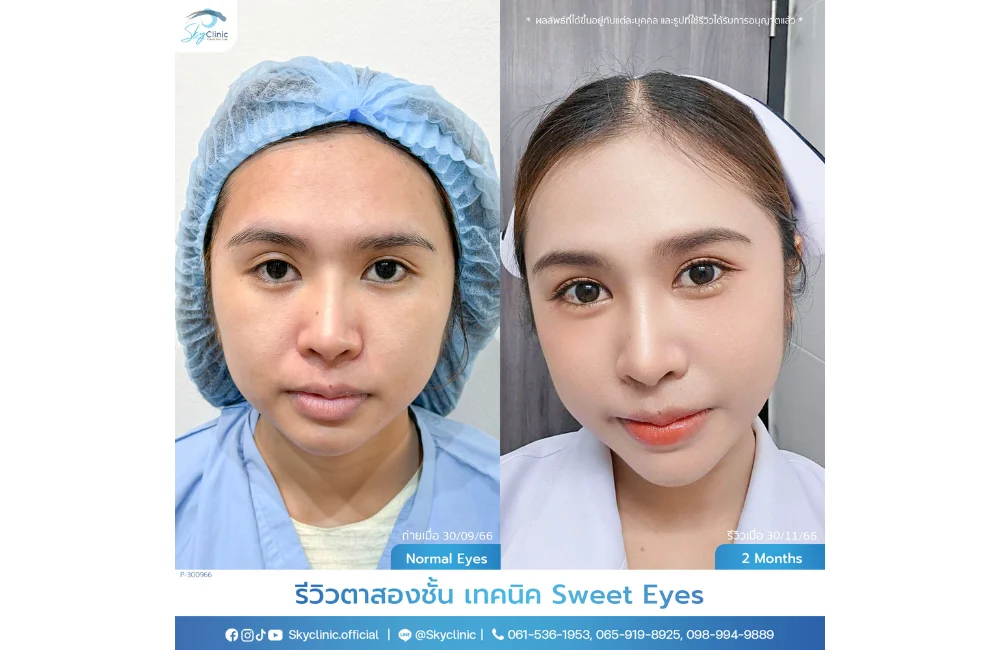
Natural-Looking Double Eyelid Surgery Reviews at Sky Clinic
To help you make an informed decision, take a look at the before-and-after results of patients who have undergone double eyelid surgery at Sky Clinic. The results demonstrate more open and refreshed-looking eyes with well-defined eyelid creases that are naturally balanced with each individual's facial features. Most patients experience mild to moderate swelling and bruising that gradually improve during the recovery period, while the incision typically heals well and the scar becomes less noticeable over time.
Why Choose Double Eyelid Surgery at Sky Clinic
Natural-looking double eyelid surgery is a procedure that can enhance the appearance of the eyes. Achieving optimal results requires careful preoperative assessment, proper surgical planning, and appropriate postoperative care. Choosing a qualified surgeon and a reputable clinic, together with carefully following all postoperative instructions, can help optimize surgical outcomes. Whether you are dissatisfied with the results of a previous double eyelid surgery, considering revision surgery, or seeking natural-looking double eyelids for the first time, Sky Clinic is committed to providing personalised treatment tailored to your individual needs. Led by Dr. Sky Burapadecha (Dr. Sky) and a team of experienced ophthalmologists, Sky Clinic specialises in designing and refining eyelid creases based on each patient's eyelid anatomy and facial proportions to achieve natural-looking results. Before surgery, every patient receives a personal consultation with a specialist ophthalmologist to thoroughly assess their eyelid condition and design the most suitable treatment plan. In addition, Sky Clinic utilizes a Premium Stitch technique with ultra-fine specialized sutures that are thinner than a strand of hair. This advanced suture material helps minimize the risk of visible scarring and supports smoother, more refined healing. As a result, patients can enjoy natural-looking eyelid creases, minimal downtime, and a smoother recovery process, allowing them to return to their daily activities more comfortably after the procedure.
Summary
Double eyelid surgery is an effective procedure for addressing eyelid concerns and may help improve self-confidence. Achieving safe and satisfactory results begins with thorough research, appropriate preparation, and, most importantly, choosing a qualified surgeon with extensive experience in eyelid surgery. If you are considering double eyelid surgery, Sky Clinic provides personalised consultations and comprehensive assessments performed by specialist ophthalmologists. Each treatment plan is carefully tailored to the patient's eyelid anatomy, facial proportions, and individual goals to achieve balanced, natural-looking results. Our team is committed to delivering personalised care throughout every stage of treatment, from consultation to postoperative follow-up.
Frequently Asked Questions About Double Eyelid Surgery
Is double eyelid surgery painful?
Before the procedure, the surgeon will administer a local anaesthetic to the eyelids, so you should not feel pain during the surgery. You may experience mild pressure or a sensation of tightness while the procedure is being performed. After the anaesthetic wears off, it is normal to experience mild soreness or discomfort, which can usually be managed with prescribed pain medication.
When can I wear makeup after double eyelid surgery?
It is recommended to avoid applying eye makeup, including eyeshadow, eyeliner, and mascara, for at least two weeks after surgery or until the incision has fully healed and any sutures have been removed. This helps reduce the risk of infection and allows the surgical site to heal properly.
When will the scar from double eyelid surgery fully heal?
In the early stages of recovery, it is normal to notice some redness or a more prominent eyelid crease. However, the incision will gradually fade, and the scar will become less noticeable as it blends into the natural eyelid crease over time. This process typically takes approximately 3–6 months, although the healing timeline varies depending on the individual's healing response and skin characteristics.
Can previously done double eyelid surgery be revised?
It is possible to perform revision surgery if the previous results have resulted in asymmetrical eyelid creases, loosening of the eyelid crease, or recurrent eyelid drooping (ptosis). However, a specialist ophthalmologist should first perform a thorough evaluation of the eyelid anatomy, tissue condition, and previous surgical results to develop the most appropriate revision surgical plan.
Source : -